What Is a SeaWalk – And Why Zanzibar’s Version Is the Best in East Africa

I’ve watched hundreds of people step off our pontoon and into the Indian Ocean for the first time. Every single one of them hesitates for about three seconds — and then grins. That grin is the whole reason we built Zanzibar SeaWalk.

We’re not a dive school or a boat tour company. We’re one thing: East Africa’s first dedicated underwater walking tour, operating from Nungwi Beach in northern Zanzibar. If you’ve never heard of a SeaWalk before, that’s okay — most people haven’t. By the end of this post, you’ll know exactly what it is, whether it’s right for you, and how to book one without the usual tourist-trap uncertainty.

So, What Actually Is a SeaWalk?

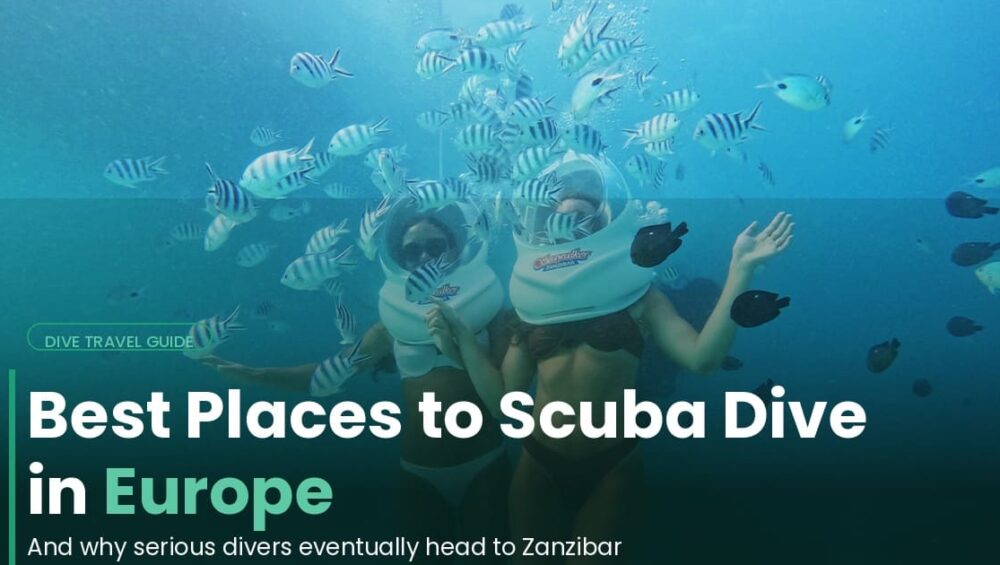
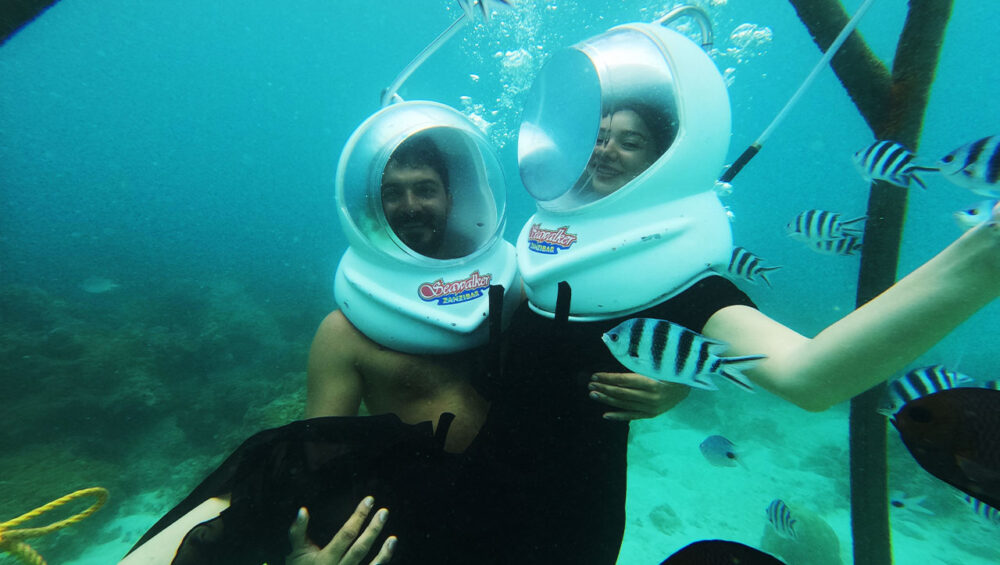
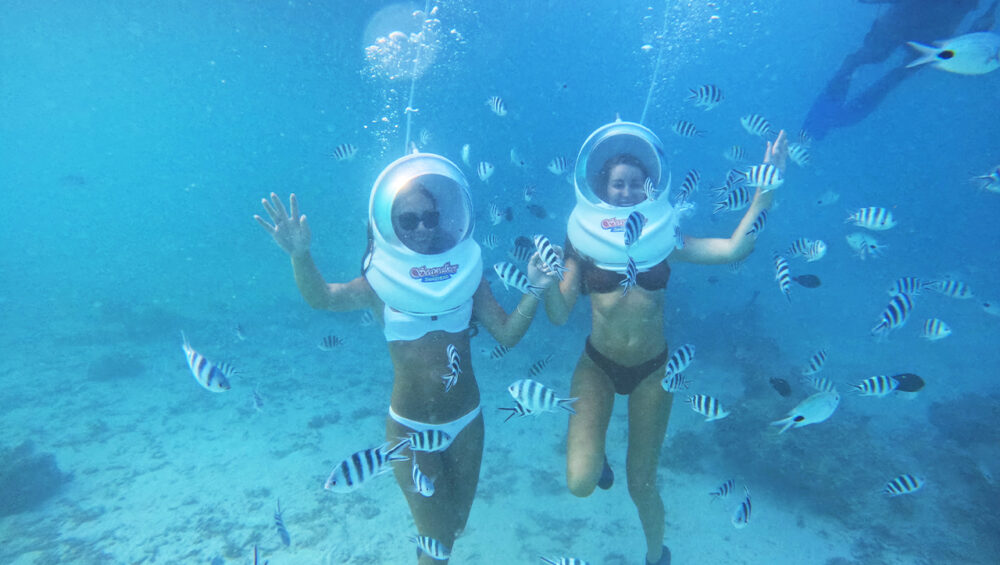
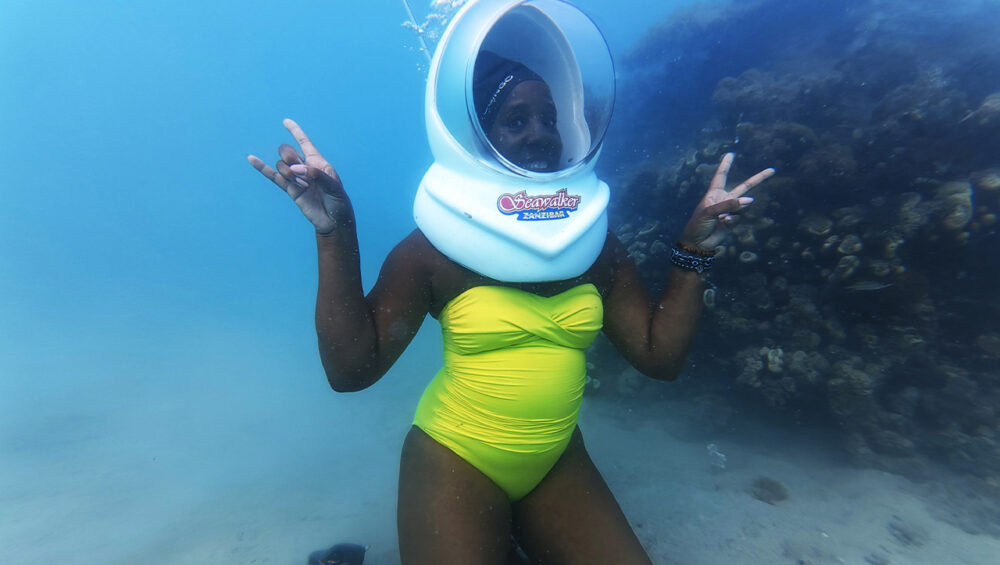
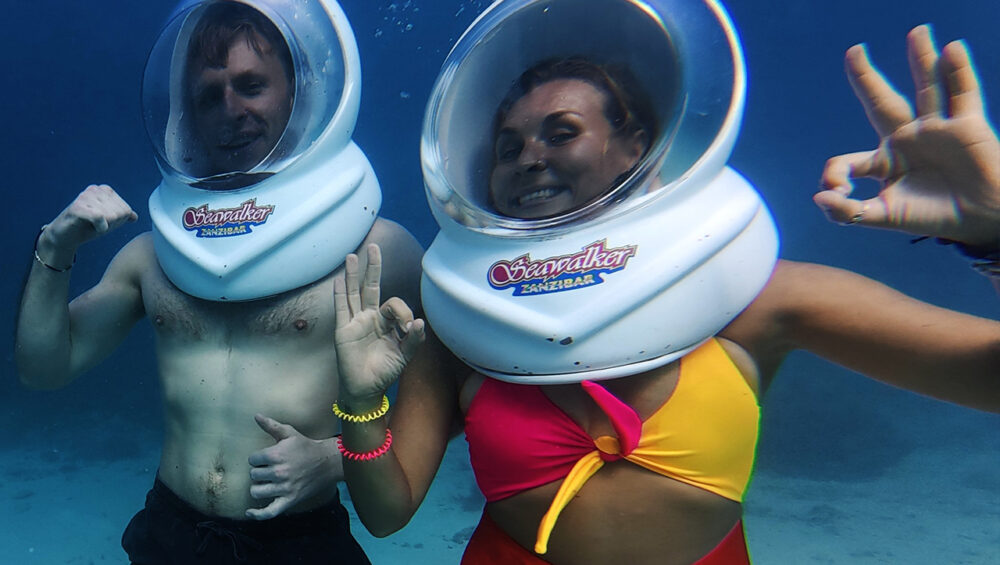
A SeaWalk — sometimes called helmet diving or underwater walking — lets you walk on the seabed while wearing a specially designed diving helmet that constantly supplies fresh air. The helmet sits over your head and shoulders and keeps your face completely dry. You don’t need a wetsuit, you don’t need to know how to swim, and you don’t go underwater alone. A trained guide walks beside you the entire time.

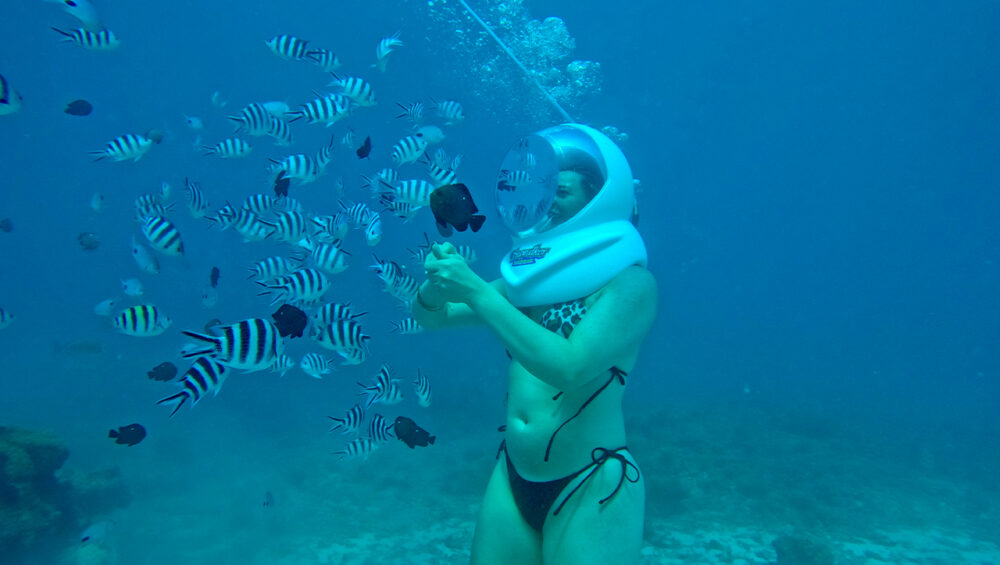
Think of it as the least stressful way to experience a coral reef up close. You’re essentially strolling through an aquarium — except the fish are wild, the coral is real, and the water temperature is around 27°C year-round.

The helmets we use at Zanzibar SeaWalk are sourced from a certified supplier and maintained to commercial diving safety standards. The air supply is continuous, not tank-based, which means there’s no countdown and no pressure to rush.


Who Can Do It?

This is where a lot of travellers are surprised.

You don’t need to be a swimmer. You can wear glasses or contact lenses. You can be 10 years old or 70. You don’t need prior diving experience, a certification, or even confidence in the water. We’ve welcomed guests who haven’t swum since school, guests with mild claustrophobia (we talk through it beforehand), and guests with mobility considerations. Our guides assess comfort before every session — no one goes in feeling pushed.

The main restrictions are:

  • Minimum age: 10 years
  • Not recommended for guests with active ear infections, severe respiratory conditions, or those who are pregnant
  • Maximum depth is shallow (around 3–4 metres), so ear pressure is minimal

If you’re on the fence, contact us before booking. We’d rather answer your questions honestly than have you arrive with the wrong expectations.


Where It Happens: Nungwi Beach

Location matters a lot in Zanzibar. The island’s water visibility and reef health vary enormously depending on where you are and what time of year it is.

We operate from Nungwi, the northernmost tip of the island, for a specific reason: the tidal cycle here means the water stays deep enough throughout the day to run consistent sessions. On the south and east coasts, the tide drops so dramatically in the afternoon that many water activities simply can’t operate. Nungwi doesn’t have that problem.

The reef system off Nungwi also happens to be one of the healthiest on the island. You’ll likely see parrotfish, angelfish, pufferfish, sea urchins, staghorn coral, and — if you’re lucky — a passing sea turtle. We don’t feed the fish or interfere with the reef. The marine life is there because the habitat is intact.

If you’re planning a full day in the area, read our guide to top Nungwi beach activities to combine the SeaWalk with snorkelling and a sunset dhow trip.


What the Experience Actually Looks Like

Before you go in: You arrive at our base beside Double A Beach Hotel. Our team runs a pre-briefing — no more than 15 minutes — covering what the helmet feels like, how to signal your guide, and what to expect as you descend. This isn’t a waiver-signing formality. We take the time to make sure everyone is comfortable before we start.

In the water: You’ll wade out from the beach with your guide, then descend slowly to the seabed. The water reaches your shoulders before the helmet goes on. Once it’s sealed, you hear the air flowing in — a steady, reassuring hiss — and you take a few breaths to get comfortable. Then you walk.

Sessions last around 20–25 minutes underwater. The pace is entirely yours. Stop, point, drift close to a coral head. Your guide knows exactly where the interesting wildlife tends to cluster.

Coming back up: You surface slowly, the helmet comes off, and you’re back on the beach. Wet from the shoulders down, grinning.


Pricing and What’s Included

We keep our pricing transparent because hidden fees are the fastest way to lose a guest’s trust.

  • Regular SeaWalk: From $70 per person. Includes guided session, helmet, and equipment. Suitable for groups and solo travellers.
  • Private SeaWalk (up to 5 people): From $315 (10% off regular rate). Ideal for families, couples, or small groups who want the experience without other guests.

All prices include the briefing, equipment, and your guide. There are no extra charges for glasses wearers, for session photography if you use your own waterproof device, or for rescheduling due to weather.

Speaking of weather: if sea conditions are unsafe, we reschedule or refund. Full stop. The decision is always made by our dive team, not by a commercial schedule.

Book your SeaWalk experience here →


SeaWalk vs Snorkelling vs Scuba: Which Is Right for You?

We get asked this a lot, so here’s an honest comparison:

Snorkelling is cheapest and most accessible. You stay at the surface, looking down. Good for fish-spotting, but you’re always separated from the reef by a wall of water — the intimacy isn’t quite there.

Scuba diving is the most immersive. You go deeper, stay longer, and have more freedom. But you need certification (or a 3-hour intro course), you’re dependent on a tank, and the pressure changes are more significant. Not suitable for everyone, and not relaxing if you’re anxious about breathing underwater.

SeaWalk sits between the two. You’re at the bottom, close to the reef, surrounded by fish — but you’re breathing normally, standing upright, and your guide is right next to you. For families, nervous travellers, or anyone who wants the underwater experience without the technical overhead, it’s consistently the better choice.

We’ve written a longer breakdown in our post on best scuba diving in the world vs SeaWalk if you want to dig into it.


Is It Safe?

Yes — but “safe” means something specific to us.

Our guides are trained to commercial diving safety standards, not recreational snorkel-guide level. The helmets are pressure-tested before every session. We monitor sea conditions twice daily and won’t run trips if visibility drops below our threshold or if there’s surface chop that would make the descent uncomfortable.

The depth involved (3–4 metres) is the same as the deep end of a standard swimming pool. Ear pressure at this depth is mild for most people and entirely manageable with the technique our team will teach you.

We’ve been running this operation since launch and have never had a guest sustain an injury during a session. We say that not to boast, but because it’s the kind of thing you deserve to know before you get in the water.

If you have specific health questions, check our FAQ page or call us directly on +255 778 619 627.

Best Places to Scuba Dive in Europe (And Why Serious Divers Eventually Head to Zanzibar)

Best Places to Scuba Dive in Europe (And Why Serious Divers Eventually Head to Zanzibar)

If you’ve been chasing the next great dive, Europe probably has a spot on your list. And fair enough — the continent punches above its weight underwater. From sunken German warships to ice-cold glacial fissures where you can literally touch two tectonic plates, European diving offers something genuinely rare: history you can swim through.

I’ve spent years exploring dive sites across multiple continents, and Europe’s underwater world consistently surprises even the most well-travelled divers. But here’s something most dive blogs won’t tell you upfront — once you’ve done Europe’s greatest hits, your eyes inevitably drift south. Toward warmer water, wilder marine life, and experiences like diving in Zanzibar that feel completely different from anything the Mediterranean or North Atlantic can offer.

More on that later. First, let’s get honest about where Europe’s diving is genuinely world-class.

The Best Places to Scuba Dive in Europe

1. Silfra Fissure, Iceland — The Clearest Water on the Planet

Nothing quite prepares you for Silfra. Located inside Thingvellir National Park about 40 minutes from Reykjavík, this fissure runs between the North American and Eurasian tectonic plates. The water comes filtered through lava rock for decades before it reaches you, giving visibility that consistently exceeds 100 metres — a number most divers hear and don’t quite believe until they’re looking down a cathedral-like tunnel of blue light with no visible end.

The water sits at a constant 2–4°C year-round, so a dry suit certification isn’t optional — it’s a hard requirement. That said, the dive itself is not technically challenging. It’s calm, slow, and surreal. You float through rock chambers stained with vivid green and yellow algae, through sections called the Hall, the Cathedral, and Lagoon. There’s very little marine life here, which is somehow part of the point. It’s geological wonder in its purest form.

Best time to dive: Year-round, though March to October offers slightly better logistics. Certification required: Advanced Open Water + Dry Suit certification minimum. Good to know: Independent diving is not permitted; book through a licensed operator.


2. Scapa Flow, Orkney, Scotland — The Greatest Wreck Diving in the North Atlantic

Scapa Flow in the Orkney Islands is the kind of place that makes dive historians weak at the knees. In June 1919, the commander of the interned German High Seas Fleet ordered 52 warships scuttled simultaneously — one of the most extraordinary acts of deliberate mass-sinking in naval history. Seven of those battleships and cruisers still lie on the seabed today, along with additional vessels lost during both World Wars.

The water is cold (between 4°C and 14°C depending on season), and visibility ranges from 10 to 20 metres. These are big, complex wrecks with swim-throughs, encrusted superstructures, and marine life that has claimed every surface — seals, lobsters, starfish, wolf fish, and dozens of species thriving inside what are essentially artificial reefs built from 100-year-old steel.

The SMS Markgraf is one of the standouts — a battlecruiser resting upright at 45 metres, still largely intact, her deck guns pointing at nothing. It’s demanding diving, better suited to those with real experience, but the experience is genuinely unlike anything else in Europe.

Best time to dive: May to September for best conditions. Certification required: Advanced Open Water at minimum; some wrecks require technical qualifications. Getting there: Fly to Kirkwall Airport (KOI) on Orkney.


3. Gozo (Malta) — Mediterranean Diving at Its Most Accessible

Malta repeatedly tops European dive rankings, and Gozo, the smaller island to the north, is where the best of it happens. The Blue Hole is the headline act — a natural chimney in the rock that opens into a breathtaking arch and then a wall that drops away into blue nothing. Visibility regularly hits 30 metres, water temperatures stay between 18°C and 26°C depending on season, and the marine life is genuinely excellent: octopuses, parrotfish, moray eels, seahorses, groupers.

What sets Malta apart from most European destinations is how beginner-friendly it is without sacrificing depth. An Open Water certification gets you into most dive sites. The advanced sites — deeper walls, the Um El Faroud wreck, the Inland Sea caverns — give experienced divers plenty to work with. And practically speaking, Malta is easy to reach, affordable by European standards, and has dive operators everywhere.

The MS Zenobia off Cyprus is worth a sidebar mention here — technically not Malta but closely associated in diving itineraries. This Swedish cargo ferry sank on her maiden voyage in 1980 and now lies on her side at 42 metres near Larnaca, complete with a hold full of trucks. It’s considered one of the top wreck dives in the world, not just Europe.

Best time to dive: April to November. Certification required: Open Water for most sites; Advanced for deeper wreck dives.


4. Medes Islands, Costa Brava (Spain) — Mediterranean Biodiversity in One Place

A few hours north of Barcelona, the Costa Brava is an underrated stretch of coastline that serious divers have known about for decades. The Medes Islands sit within a protected marine reserve that has been in place since 1990, and the results are visible the moment you drop below the surface — fish populations here are noticeably denser than almost anywhere else in the Mediterranean.

Fourteen dive sites surround the islands, ranging from shallow reef dives suitable for beginners to deeper walls and caves. You’ll find moray eels that have grown comfortably large because nobody has bothered them in 35+ years, groupers that come curiously close, lobsters tucked under every ledge, and a coral coverage that still impresses even if it can’t match tropical standards.

The nearby Cap de Creus, Formigues Islands, and Tossa de Mar round out a region where you could spend two weeks diving without repeating yourself. Dive operators in the area are plentiful and well-priced compared to the Balearics or Italian coast.

Best time to dive: May to October. Certification required: Open Water for most sites. Planning tip: Book accommodation early for summer; the Costa Brava is popular with local Spanish tourists who know what they’re doing.


5. Lofoten Islands, Norway — Kelp Forests, Wrecks, and Orca

Norway earns its spot on this list through sheer drama. The Lofoten Islands are visually unlike anywhere else in Europe — jagged peaks rising straight from the fjords, fishing villages clinging to rock, and below the waterline, a completely different kind of spectacle. Dense kelp forests filter the light. Old wrecks lie scattered in the fjords. The marine life includes wolf fish, anglerfish, and an unnerving variety of creatures that look like they were designed by someone with a dark sense of humour.

The headliner, though, is what happens between November and January: hundreds of killer whales and humpback whales follow a herring migration into the shallow waters, creating one of the few places on earth where you can enter the water with orca hunting actively around you. Operators use fast RIBs to get divers into position, but be realistic — it’s cold (2°C to 8°C), physically demanding, and the animals are entirely in control of whether they allow contact. But on the right day, it is genuinely one of the most extraordinary things you can do with a set of fins.

Saltstraumen near Bodø is worth mentioning separately — it’s a tidal strait with the strongest maelstrom current on the planet, creating a drift dive experience that has no real equivalent.

Best time to dive: June to September for kelp forest diving; November to January for orca. Certification required: Advanced Open Water; dry suit certification mandatory.


6. Azores, Portugal — Pelagic Encounters Far Out in the Atlantic

The Azores are nine islands sitting in the mid-Atlantic, far enough from the mainland to catch ocean currents that bring deep-water species close to the surface. This is big-animal diving: blue sharks, mako sharks, mobula rays, hammerheads, sperm whales in the right season. The Princess Alice Bank is a submerged seamount in the open ocean where enormous schools of fish gather — it’s the kind of dive that converts reef divers into committed pelagic junkies.

Visibility can reach 40 metres in the right conditions, and the water temperatures hover around 18–22°C in summer, which is warm enough for a 5mm wetsuit if you run warm. This isn’t beginner diving — the best sites are serious open-ocean experiences, and operators rightly require experience and the right qualifications. But the reward is proportional to the investment.

Best time to dive: June to October. Certification required: Advanced Open Water minimum; prior open-ocean experience strongly recommended.


7. Croatian Adriatic (Vis Island, Dubrovnik) — History Underwater

Croatia’s Adriatic coast offers something the other European destinations don’t quite match: warm, clear water (18–25°C, visibility up to 30 metres) with a history underwater that spans from ancient Rome to the Second World War.

Vis Island is the standout for serious divers. The wreck of the USAAF B-17G Flying Fortress lies at 72 metres — too deep for recreational diving but a bucket-list technical dive in genuinely beautiful condition. The surrounding walls, caves, and reef systems give recreational divers plenty to work with at more accessible depths. Near Dubrovnik, the Taranto wreck (an Italian cargo ship covered in marine life) and various cave systems make for excellent daytrip diving without needing to venture far from the old city.

Best time to dive: April to November. Certification required: Open Water for most reef and cave sites; technical certification for the deep wrecks.


What Europe Can’t Give You (And Where to Find It)

Here’s an honest observation from someone who has dived both: European diving is largely excellent despite the conditions, not because of them. Cold water, dry suits, limited visibility — these are often part of the experience, not incidentals to work around. And the history — the wrecks, the archaeology, the geological drama of Silfra — is genuinely irreplaceable.

But for warmth, colour, and sheer variety of tropical marine life, Europe doesn’t compete. The Indo-Pacific reef systems that extend down East Africa’s coastline are in a different category entirely.

Zanzibar sits right in the middle of it. The Indian Ocean off the Tanzanian coast brings warm, clear water, reef systems with hundreds of species, regular encounters with sea turtles, dolphins, and whale sharks, and a diving scene that is significantly less crowded than any of the destinations above. Scuba diving in Zanzibar means reaching sites that would be headline-grabbing in Europe, on a regular Tuesday morning.


Not Ready to Scuba Dive Yet? There’s Another Way In

One thing that often surprises divers researching Zanzibar: not every incredible underwater experience here requires certification, a wetsuit, or even the ability to swim.

Zanzibar SeaWalk offers East Africa’s first underwater walking tour — a helmet-diving experience at Nungwi Beach where you walk on the ocean floor with a pressurised helmet keeping your head completely dry. No swimming skills needed. Glasses and contact lenses are fine. Children from age 8 and adults with no diving experience at all regularly do this, and the fish are just as real and just as close as they would be through a scuba mask.

It’s not a substitute for a full dive, but as an introduction to what Zanzibar’s underwater world actually looks like — and as an experience in its own right — it’s genuinely memorable. Plenty of experienced divers who visit for a week of reef diving book a SeaWalk on the last day just for the different perspective.


When Should You Actually Go?

For European diving, timing varies significantly by location — Silfra is year-round, Scotland is better in summer, Croatia’s ideal window runs April to November. Each destination has its own logic.

For Zanzibar, the question is simpler. If you want to know the best time to visit Zanzibar Tanzania for diving, the two dry seasons — June to October and December to February — offer the best conditions: calm seas, strong visibility, and the best chance of encountering larger pelagic species. The March to May long rains and the November short rains bring rougher conditions that can limit diving days.

That said, Zanzibar’s dive season is long. Even in the shoulder periods, experienced operators can often get you in the water on the better days.


Putting It Together: A Diver’s Honest Guide

If you’re building a serious dive travel list, Europe belongs on it. Silfra will genuinely change how you think about visibility. Scapa Flow is history you can hold your hand against. Malta’s Blue Hole is accessible enough for newer divers but impressive enough to stay with you for years.

But after you’ve worked through the European circuit — or if you’re looking for your first long-haul dive destination — Zanzibar deserves serious consideration. The marine life is richer, the conditions are warmer, and the overall diving experience is more consistently spectacular.

And if you’re travelling with people who don’t dive, Zanzibar SeaWalk means nobody has to sit it out.


Ready to explore Zanzibar’s underwater world?

Whether you’re thinking about scuba diving in Zanzibar, planning your first underwater walking tour, or just starting to research the best time to visit Zanzibar Tanzania, we’re here to help. Get in touch with the Zanzibar SeaWalk team or book your experience online — sessions fill up quickly during peak season.


Zanzibar SeaWalk is based at Double A Beach Hotel, Nungwi, Zanzibar. We offer East Africa’s first helmet-diving underwater walking experience, with professional guides, no swimming requirement, and instant booking confirmation. Contact us: +255 778 619 627 | info@zanzibar-seawalk.com

Zanzibar Tours: The Only Guide You’ll Need Before You Go

Zanzibar Tours: The Only Guide You’ll Need Before You Go

There’s a moment — and almost every traveller who has been there describes it the same way — when the ferry pulls into Stone Town and the smell of cloves, ocean salt, and grilled fish hits you all at once. That’s Zanzibar. And no amount of reading about it really prepares you for it.

This guide is built on real experience navigating the island’s winding alleys, its coral reefs, its spice farms, and the many tour operators competing for your attention. Whether you’re planning Zanzibar tours as a standalone trip or combining them with a Tanzania safari, this is everything you need to know — laid out honestly, without the fluff.

Why Zanzibar Tours Are Worth Every Shilling

Zanzibar isn’t just a beach destination. It’s an island where Swahili, Arab, Persian, Indian, and Portuguese histories collide into something utterly unique. UNESCO-listed Stone Town sits at its heart, a living, breathing medley of carved wooden doors, narrow coral-stone streets, and rooftop restaurants where the Indian Ocean stretches endlessly before you.

But here’s what the Instagram posts don’t always show you: getting the most out of Zanzibar genuinely depends on how you structure your time there. Tourists who book nothing in advance often end up overcharged, underwhelmed, or stuck on the wrong beach at the wrong tide. Those who choose their Zanzibar tours thoughtfully — and ideally book with operators who know the island intimately — come away with stories they tell for years.

Tour Tanzania Zanzibar: Combining the Mainland with the Island

For most international travellers, Zanzibar forms the beach finale to a wider Tanzania itinerary. And it’s a combination that works extraordinarily well — both logistically and experientially.

The Classic Tanzania–Zanzibar Combination

The most popular sequence goes like this: fly into Kilimanjaro or Dar es Salaam, spend 5–10 days on safari in the Serengeti, Ngorongoro Crater, or Tarangire, then hop across to Zanzibar for 4–7 days of rest and exploration. The contrast — from the dust and drama of the savanna to the turquoise stillness of the Indian Ocean — is one of travel’s great one-two punches.

Practically speaking, the Dar es Salaam to Zanzibar crossing is easy. You can take the high-speed ferry (roughly 2 hours), which is inexpensive and scenic, or fly (around 20 minutes, with several daily flights on carriers like Coastal Aviation, Auric Air, and ZanAir). Most tour operators who handle Tanzania packages can coordinate the transfer seamlessly if you ask.


What to Look for in a Combined Tanzania–Zanzibar Package

When booking a combined tour Tanzania Zanzibar itinerary, there are a few things worth scrutinising:

  • Who handles each leg? Some mainland safari operators hand you off to a completely separate Zanzibar company with no continuity. Know in advance who you’re dealing with on each side.
  • Is accommodation included, or just transfers? Budget packages sometimes cover transport but leave you to sort hotels yourself.
  • What’s the cancellation policy across both parts? Zanzibar weather, particularly between April and May (the long rains) and November (short rains), can genuinely disrupt plans.

Zanzibar Day Tours: Making the Most of Limited Time

Not everyone has a week. Plenty of visitors — cruise passengers, those on short stopovers, or travellers who prefer to base themselves at a resort — rely on Zanzibar day tours to see the island’s highlights.

1. Stone Town Half-Day Walking Tour

Stone Town is a UNESCO World Heritage Site, and it earns that designation. A good guided walk (typically 3–4 hours) will take you through the old slave market and the Anglican Cathedral built on its site, the Palace Museum, the Old Fort, and the bustling Darajani Market. Book through your hotel or a licensed operator — expect to pay around $20–35 USD per person. Best time: early morning (8–11am) before the heat builds.

2. Spice Farm Tour

Zanzibar earned its historical name — “the Spice Island” — honestly. Cloves, vanilla, cinnamon, cardamom, black pepper, lemongrass: the working spice farms in the island’s central region grow them all. A good spice tour lasts 2–3 hours and is genuinely educational — you’ll touch, smell, and taste, and most include a traditional Swahili lunch. Cost: typically $25–45 USD per person including transport and lunch.

3. Jozani Forest & Red Colobus Monkey Tour

Jozani Chwaka Bay National Park is home to the endangered Zanzibar red colobus monkey — found nowhere else on earth. A guided walk through the forest (about 1.5–2 hours) almost always results in close-up encounters with these remarkably unbothered primates. The park also contains a beautiful mangrove boardwalk. Cost: park entrance around $8 USD; bundled day tours run $30–55 USD.

4. Snorkelling at Mnemba Atoll

Mnemba Atoll, off the northeast coast near Nungwi, is widely regarded as Zanzibar’s finest snorkelling and diving destination. The coral is in excellent condition, visibility routinely reaches 15–25 metres, and the fish life is extraordinary — green turtles, dolphins, octopus, and hundreds of reef fish species. Day boat trips run 4–6 hours including transport, guide, equipment, and lunch. Cost: $60–120 USD per person.

5. Dolphin Tour in Kizimkazi

Kizimkazi, on Zanzibar’s southern tip, is one of the few places in the world where you can reliably swim with spinner dolphins in the wild. Boats go out early (typically departing around 7am) to find the pods. Seek out operators who follow responsible wildlife guidelines — the dolphin tourism industry has faced criticism over boat crowding, and the ethical operators are worth finding.


Zanzibar Private Tours: When It’s Worth Paying More

Zanzibar private tours sit at a different price point than group options, but for certain travellers and certain experiences, they’re genuinely the right call — not just a luxury upgrade.

Who Benefits Most from Private Tours?

  • Couples and honeymooners. Private tours allow for flexibility, pacing, and a degree of intimacy that group tours structurally cannot offer.
  • Families with young children. Private arrangements mean you stop when the kids need a break and eat when you’re hungry rather than on a schedule designed for eighteen adults.
  • Travellers with specific interests. Photography-focused walks, deep-dive history, birdwatching — private guides adapt in ways group tours can’t.
  • Those with limited mobility. Private guides adapt. Group tours often can’t.

What a Good Zanzibar Private Tour Includes

Beyond the obvious (just you and your group), look for: a licensed, knowledgeable guide; a clearly detailed itinerary in writing before you commit; flexibility to modify the schedule on the day; and transparent pricing with no “optional” extras that are really expected. Private full-day tours typically run $150–350 USD for a couple depending on what’s included.

Zanzibar Tours and Rental: Getting Around Independently

Not every visitor wants a structured tour. Zanzibar is small enough — roughly 85km long and 39km wide — that independent exploration is entirely feasible. Here’s an honest look at the rental options.

Scooter and Motorbike Rental

Renting a scooter is the most popular way to explore independently. It’s cheap (typically $15–30 USD per day), flexible, and gives access to villages and beaches that group buses don’t reach. Important caveats: roads vary enormously (secondary roads can be rough after rain); always wear a helmet; your travel insurance may not cover motorbike accidents — check your policy before you rent.

Car and 4WD Rental

For larger groups or those wanting more range, a car rental makes sense. 4WDs are particularly useful for heading south toward Menai Bay or exploring the less-visited western coast. Expect $50–100 USD per day for a small car. Driving is on the left; Stone Town’s old town traffic can be chaotic.

Bicycle Rental

For short explorations around Nungwi, Kendwa, or Paje, bicycle rental is inexpensive and genuinely enjoyable. Distances are manageable and you’ll see far more than from a car. Expect $5–10 USD per day.

Boat Charter and Dhow Rental

For reaching smaller surrounding islands — Prison Island (Changuu), Chapwani, or Chumbe — private boat charter is the standard option. Half-day charters to Prison Island (famous for its giant Aldabra tortoises) run roughly $30–60 USD per person in a small group.


Practical Zanzibar Tour Planning: What Nobody Tells You

The Tide Problem

Zanzibar’s tidal range is large. At low tide, parts of the east coast see the sea retreat so far that you can’t swim or snorkel for hours. If you’re booking a beach day or snorkelling excursion, ask specifically about the tides on your planned date. Any reputable operator will know; hesitation on this question is a yellow flag.

The Rainy Season Reality

April, May, and parts of November are genuinely rainy. Tours operate, but boats get cancelled, roads flood, and some attractions are best experienced dry. If you’re travelling in shoulder or wet season, build flexibility into your itinerary and confirm cancellation policies.

Tips and Tipping Culture

Tipping guides is standard and appreciated. A reasonable guideline for a half-day tour is $5–10 USD per person; for a full day, $10–20. For excellent, personalised private guiding, more is always welcome and means a great deal given local wages.


How to Choose the Right Zanzibar Tour Operator

This is where research genuinely pays off. The tour market in Zanzibar ranges from excellent licensed operators with experienced staff and well-maintained equipment to informal outfits running budget boats with no safety equipment.

Look for: ZATI (Zanzibar Association of Tourism Investors) membership or similar registered status. Verifiable reviews on TripAdvisor or Google (not just the operator’s own website). Clear written itineraries. Responsive, professional communication before you book.

Be cautious of: Operators who pressure you to book immediately. Vague answers about what is included. Suspiciously low prices with no clear explanation. No cancellation or refund policy.

Ask before you book: Is your guide licensed? What safety equipment do you carry on boats? What happens if weather forces cancellation? Are entry fees included in the quoted price?


The Bottom Line

Zanzibar rewards the traveller who puts a little thought into it. The beaches are as beautiful as the photographs suggest; the reefs are genuinely extraordinary; the history is dense and fascinating; the food — Swahili-spiced seafood grilled over open charcoal — is something you’ll think about for a long time after you leave.

The difference between a mediocre trip and a memorable one usually comes down not to the destination but to the decisions made before arrival: which tours, which operator, which beaches, which days. Do that groundwork well, and Zanzibar will do the rest.

Author’s Note: This guide is informed by firsthand experience in Zanzibar and East Africa, cross-referenced with current operator information and traveller reports. Prices quoted are approximate and subject to seasonal variation — always confirm current rates directly with operators.

Planning Your Zanzibar Trip 2026: What Nobody Tells You Before You Go | Zanzibar SeaWalk

There’s a moment on every Zanzibar holiday when you stop mid-step, look around, and realise you had no idea a place like this could actually exist. The Indian Ocean is so blue it looks rendered. The sand so white it hurts to look at on a cloudless afternoon. And yet — for most visitors in 2026 — the most extraordinary moment of their entire trip happens not on the beach, but six metres below it.

This guide pulls together everything you need to know before you book your flights. Whether this is your first Zanzibar holiday or your third, read on to find out why 2026 is a genuinely strong year to visit.

🌊
28–30°CAverage ocean temperature
☀️
Jun–OctIdeal dry season window
🌍
1,651 km²Total island area
🐠
500+
 

Why Zanzibar in 2026?

Tourism infrastructure along the northern coast has matured considerably without losing the relaxed, unhurried character that draws people here in the first place. Flights from Europe, the Middle East, and South Asia are more connected through Abeid Amani Karume International Airport (ZNZ) than ever before.

The coral reefs off Nungwi are recovering well from previous bleaching events, water visibility during the dry season is exceptional, and marine life is more accessible than ever — partly thanks to the SeaWalk helmet-diving experience at Nungwi.

When to Go: Seasons Honestly Explained

Zanzibar has two rainy seasons and two dry seasons. The difference matters enormously when planning a beach trip.

Period

Conditions

For Your Trip

June – October

Dry, warm, excellent visibility

Best overall — book early

December – February

Dry, hot, calm trade winds

Excellent for beach & water activities

March – May

Long rains (masika). Heavy downpours

Avoid for beach trips

November

Short rains (vuli). Unpredictable showers

Manageable; plan for afternoon weather

For a Zanzibar trip in 2026 focused on water activities, the June through October window is hard to beat. July and August sit at the sweet spot of dry weather, calm seas, and manageable crowds.

NOTE ON WATER ACTIVITIES & WEATHER

All water-based activities in Zanzibar — including the SeaWalk — are subject to weather and sea conditions on the day. Reputable operators will reschedule if conditions aren’t safe. Build a day of flexibility into your itinerary if water activities are a priority.

Getting Around: What Actually Works

Stone Town to Nungwi

The most popular route. A private transfer takes roughly 75–90 minutes. Shared dala-dalas are cheaper but slower. For a packed itinerary, private transfers are worth the cost for at least the airport run and Nungwi day.

Stone Town

Best navigated on foot. The UNESCO-protected old city is a maze of coral-stone alleys, ornate carved doors, and buildings layering Arab, Persian, Indian, and Portuguese influences. Budget at least half a day.

East Coast Beaches

Paje and Jambiani offer kitesurfing and a different pace. If you have more than five nights, it’s worth spending a day or two on the east coast.

The Experience Most Travellers Wish They’d Booked First

We hear it regularly: guests who spent three or four days at the beach before finally doing the SeaWalk on their second-to-last day almost always say the same thing — “Why didn’t I do this on day one?”

The Zanzibar SeaWalk is East Africa’s first underwater walking experience, operating off Nungwi Beach. You put on a weighted helmet — an inverted diving bell — and walk on the ocean floor, 3–4 metres down, among fish and coral. No swimming. No diving experience. No removing your glasses.

“Walking on the seafloor and having fish swim past your face at arm’s length is an experience that photographs genuinely cannot prepare you for.”

How It Works

The helmet (around 30kg) is supported entirely by water once you descend — you feel nothing on your shoulders. Your guide walks with you throughout, pointing out marine life and ensuring you’re comfortable. The session runs 20–30 minutes underwater, with professional guides at all times.

Who It’s Suitable For

  • Non-swimmers — no swimming required at any point
  • Glasses and contact lens wearers — vision is completely unaffected
  • First-time ocean visitors — guides handle everything
  • Families — children above minimum age may participate with parental consent
  • Anyone curious about reef life without a full diving course

ZANZIBAR SEAWALK · NUNGWI BEACH

Walk on the Ocean Floor — No Experience Needed

East Africa’s first helmet-diving experience. Safe, fully guided, and open to anyone. Regular sessions from $70 · Private groups up to 5 from $315.

Book online: zanzibar-seawalk.com  |  +255 778 619 627

I was genuinely nervous about the helmet — I’m not a strong swimmer and the idea of being underwater at all felt daunting. But the guides were patient, and once I was down there? I forgot I was nervous. I just watched the fish. It was one of the best thirty minutes of my entire trip.

— Priya S., first-time Zanzibar visitor, 2026

Beyond the Beach: What to Include in Your Itinerary

Stone Town

Half a day minimum. The House of Wonders, Old Fort, and Anglican Cathedral built on the site of the former slave market layer history in the most tangible way. Forodhani Gardens at sunset, with its outdoor food stalls, is one of East Africa’s most atmospheric street-food experiences.

Spice Tour

Zanzibar’s colonial-era nickname — the Spice Island — wasn’t an abstraction. Spice farm tours in the interior are a genuine and interesting half-day. You’ll smell and taste vanilla, cardamom, black pepper, and nutmeg at source.

Dolphins at Kizimkazi

Humpback and bottlenose dolphins congregate in the early morning near this southern village. Tours run daily; encounters are with a wild population, not a managed one. Go early, before multiple boats converge on the same pods.

Prison Island (Changuu Island)

A short boat trip from Stone Town leads to a colony of Aldabra giant tortoises — some over 100 years old. The snorkelling off the island’s beach is also excellent.

Mnemba Atoll

For serious snorkellers or certified divers, this protected marine conservation area off the northeast coast is simply among the best reef experiences in the Indian Ocean. Turtles, dolphins, and reef sharks are regularly seen.

Practical Planning: What You Actually Need to Know

Visa and Entry

Most visitors require a Tanzanian visa on arrival or an e-visa arranged in advance. Pre-applying online is recommended to avoid queues. Always verify current requirements directly with official Tanzanian immigration sources before travelling.

Currency and Payments

The Tanzanian shilling (TZS) is the local currency, though US dollars are widely accepted in tourist areas. Major operators take cards, but USD cash is strongly advised for smaller purchases and tips. ATMs in Stone Town are reliable; those in Nungwi are fewer.

Health

Zanzibar is a malaria zone — antimalarial precautions are advised. Consult a travel health clinic at least six weeks before departure. Yellow fever vaccination is required if travelling from a country with yellow fever risk. Drink bottled or purified water.

What to Pack

  • Light, breathable clothing — cotton works better than synthetics in the heat
  • Reef-safe mineral sunscreen (zinc oxide or titanium dioxide) — chemical filters damage coral
  • Rashguard or swim shirt for extended time in the water
  • Modest clothing for Stone Town and mosque visits
  • Flip-flops for the beach; closed shoes for Stone Town’s stone streets
  • Insect repellent for evenings
  • Type G power adapter (same as UK)

REEF-SAFE SUNSCREEN — A GENUINE REQUEST

Chemicals in conventional sunscreens — particularly oxybenzone and octinoxate — contribute measurably to coral bleaching. Mineral-based reef-safe sunscreens are now widely available. For any water activity near a reef including the SeaWalk, please use one. It’s a small decision with a real impact.

Final Thoughts

Zanzibar rewards a certain pace. The travellers who have the best holidays are the ones who build in enough time to actually be somewhere. Five nights minimum; seven is better. Stay in Nungwi for at least two nights to catch the SeaWalk, the beach, and the sunset.

And do the SeaWalk. It will be the photograph you show people when you get home, and the memory that stays sharpest once the tan fades.

About the Author

Written by the Zanzibar SeaWalk team, based year-round at Nungwi Beach. Questions? Reach us at info@zanzibar-seawalk.com or +255 778 619 627.

Romantic Things to Do in Zanzibar: From Sunset Dhows to an Underwater Walk Together

The water off Nungwi is the kind of blue that makes you stop mid-sentence. Warm. Clear. Lit from underneath, somehow, even on cloudy mornings. You and your partner are standing at the edge of it, and you are already half in love with the island before the first full day is done.

Zanzibar does something particular to couples. It slows you both down, pulls you out of the noise, and hands you back to each other. Whether you are on your honeymoon, celebrating an anniversary, or simply overdue for an escape that actually feels like one, this island delivers.

There are the obvious things: the beach, the seafood, the sunsets. But there are also experiences here that most couples never find. One of them happens beneath the surface of the ocean, no swimming required, and it is the kind of thing you will still be talking about years from now. More on that shortly. First, here is the full picture.

Why Zanzibar Is Made for Romance


Stone Town at dusk. The smell of cloves drifting off a spice farm. A dhow sail catching fire-orange light on its way back to shore. Zanzibar is genuinely, specifically romantic in a way that few islands manage, because the beauty here is layered. The beaches are world-class. The history is deep. The food, built on centuries of trade and spice, is extraordinary.

For couples looking for Zanzibar honeymoon experiences, the island offers something that pure beach destinations cannot: contrast. One morning you are walking barefoot on white sand. The next you are getting lost together in Stone Town’s medieval alleyways, stumbling on a rooftop bar by accident, eating grilled lobster at a table four feet from the Indian Ocean.

The warm water is another thing. Indian Ocean temperatures hover around 26 to 28 degrees Celsius for most of the year. There is nothing tentative about getting in. You just walk straight out and it holds you. For couples activities in Zanzibar, that water is the main character in almost every story.

Romantic Things to Do in Zanzibar

Walk the Ocean Floor Together at Zanzibar SeaWalk


This is the one most couples miss. And it is, genuinely, the most unusual thing you can do together on this island.

Zanzibar SeaWalk is East Africa’s first underwater walking tour, based right on Nungwi Beach beside the DoubleA Beach Hotel. You wear a specially designed helmet that keeps your head dry and delivers a steady air supply while you walk along the seabed, surrounded by coral and tropical fish, at a depth of around three to four metres. No swimming skills. No diving certification. No special fitness required. If you wear glasses, you can keep them on.

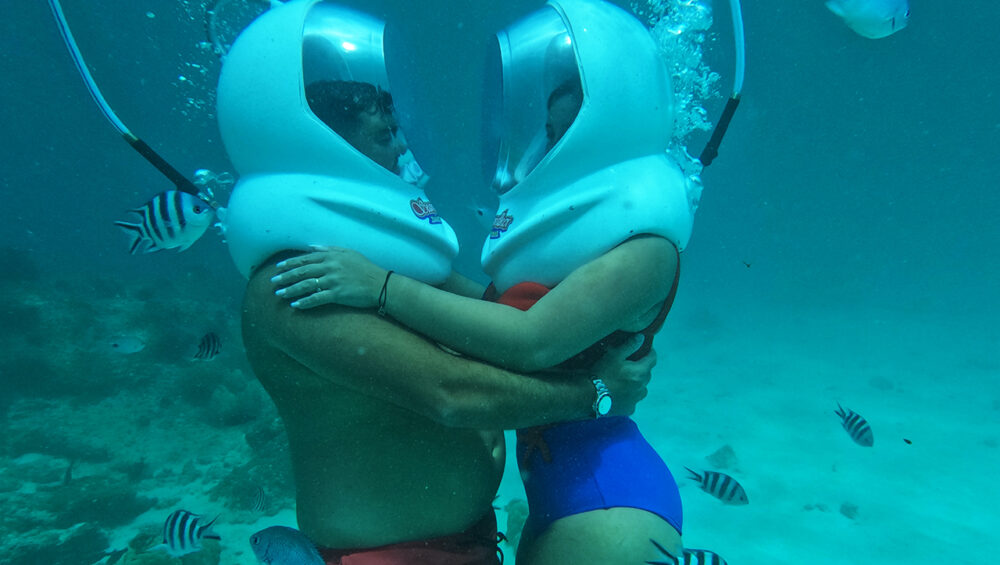
Imagine holding hands as you walk on the ocean floor, the light breaking through the surface above you, a parrotfish drifting past at arm’s length. It sounds improbable. It is completely real and completely safe, with professional guides accompanying you at every step.

The experience runs from around 20 minutes and prices start at $40 per person, with private bookings and group options available. Groups of 10 or more get 10% off, which makes it a great addition for couples travelling with friends. Book directly at 

Sunset Dhow Cruise Along the Coast

A traditional wooden dhow, the kind that has sailed these waters for a thousand years. The sun going flat and orange on the horizon. Your partner leaning into you as the sail goes slack in the evening calm. The sunset dhow cruise Zanzibar offers is one of those experiences that earns its reputation every single time, without fail.

Most cruises run 90 minutes to two hours and include drinks on board. Some operators offer private charters, which are worth the premium if you want the boat to yourselves.

Private Beach Picnic at Nungwi or Kendwa

Both beaches are postcard-worthy, but they have different characters. Nungwi stays calmer at low tide because of a natural lagoon. Kendwa is livelier, with a beach bar scene that picks up in the evenings. For something intimate, arrange a private picnic setup with your resort. Fresh fruit, grilled seafood, a bottle of something cold. Shoes optional.

Couples Spa Day at a Luxury Resort

Several of Zanzibar’s higher-end resorts offer couples treatment suites. Two beds, side by side, open to the sound of the ocean. The treatments often incorporate local ingredients: coconut oil, cloves, seaweed drawn from the same water you have been swimming in. It is a slow morning done right.

Explore Stone Town After Dark

Stone Town by day is fascinating. By night it shifts into something more cinematic. The carved wooden doors glow in lantern light. The narrow alleys clear out and go quiet. Forodhani Gardens, the waterfront night market, fills up with smoke from grills and the sound of people eating well. Wander without a plan. It is one of the more romantic things to do in Zanzibar for couples who like history with their evenings.

Snorkelling at Mnemba Atoll

About 35 minutes by boat from Stone Town, Mnemba Atoll is one of the best snorkelling sites in the Indian Ocean. The coral is healthy. The visibility is good. You will almost certainly see turtles. It is not crowded the way some reef destinations have become. Take a morning, take a guide, and go together.

Spice Farm Tour and Dinner

Zanzibar was once the world’s largest clove producer. The spice farms in the island’s interior are an hour from most beach resorts but worth the drive. You tour the farm, taste things straight from the plant, and then, if you plan ahead, eat dinner back at your resort or a restaurant that uses everything you just held in your hands. It gives the food context. It makes dinner feel like a continuation of the day.

Stargazing on the Beach

Away from city light. A clear sky. More stars than your eyes expect. Bring a towel, lie flat, let your eyes adjust. It takes about 15 minutes before the full depth of it appears. No equipment needed. No booking required. Just two people and a sky that has no bottom.

Deep-Sea Fishing Charter for Two

If one of you fishes, or if neither of you does but you are both up for something different, an early morning deep-sea charter is a good day. You are out before the sun is fully up, the water is glassy, and you have the boat mostly to yourselves. Operators along the north coast can arrange private charters for two.

Watch the Fishermen at Sunrise

This costs nothing and it is one of the most quietly intimate things on the island. The traditional fishermen at Nungwi go out before first light and come back through the shallows around dawn, pushing heavy wooden boats in through the surf. You watch from the sand with coffee, or without it. It is slow and real and unhurried. Some mornings on holiday stick with you. This is one of them.

Why SeaWalk Is the Most Unique Couples Experience on the Island


A lot of couples activities in Zanzibar are beautiful but essentially passive. You are watching something. Being carried by something. SeaWalk is the opposite. You are in it. The two of you, helmets on, walking the actual seabed together, reaching out to let fish swim between your fingers, standing inside a coral garden that almost nobody ever gets this close to.

The quiet is what surprises people. Underwater, the normal noise of a holiday disappears. No music. No other voices. Just the sound of your own breathing and the life around you. It is, genuinely, its own kind of intimacy.

Common hesitations:

“I’m not a strong swimmer.” You don’t need to be. Your feet stay on the ground.

“I wear glasses.” Wear them on the walk. The helmet accommodates them.

“Is it safe for a first-timer?” Completely. Professional guides are with you the whole time, and the safety standards are designed for people with no experience.

Zanzibar SeaWalk takes private bookings, small groups, and the 10% group discount for 10 or more makes it easy to include another couple in the plan. The booking process takes minutes at 

Tips for Planning Your Romantic Zanzibar Itinerary

Best time to visit. June through October is dry, sunny, and less humid. December through February is also reliable. The shoulder months (March to May, November) bring short rains but can be quieter and cheaper. Peak honeymoon season runs July through September, so book activities early.

Combining SeaWalk with a sunset cruise. It works perfectly as a single-day plan. Morning SeaWalk at Nungwi, a long beachside lunch, then an evening dhow cruise as the light goes flat and gold. The two experiences complement each other in a way that is hard to explain until you have done it: one takes you into the ocean, the other carries you along its surface. Together they cover the whole of it.

Sample half-day itinerary for couples:

8:30 AM: Arrive at Zanzibar SeaWalk beside DoubleA Beach Hotel, Nungwi

9:00 AM: Underwater walk (approx. 20 minutes, with briefing)

10:30 AM: Coffee and breakfast on Nungwi Beach

1:00 PM: Beachside lunch at your resort

5:30 PM: Sunset dhow cruise departs

Booking advice. SeaWalk slots fill quickly during peak season. Reserve as soon as your travel dates are confirmed. The team is reachable by phone or via the website and can answer questions about group bookings or combining experiences.

The Trip That Stays With You

Zanzibar is easy to love. The beach does most of the work. But the couples who come back with the stories, the ones who end up recommending the island to everyone they know, are usually the ones who went further than the sunlounger.

They walked the ocean floor. They watched the fishermen. They ate well and stayed up late in Stone Town. They made the romantic things to do in Zanzibar part of how they actually spent the time, not just a list of intentions.

SeaWalk is a good place to start. No experience needed. Just a willingness to do something your future selves will be glad you did.

Book your walk: zanzibar-seawalk.com/to_book/underwater-seawalk/

Phone: +255 778 619 627

Email: info@zanzibar-seawalk.com

Find them on Instagram, Facebook, and TikTok @ZNZ.SEAWALK

Top Nungwi Beach Activities: From Snorkelling to Zanzibar’s Unmissable SeaWalk

Introduction

Picture this. You step off a wooden boat onto warm white sand, turquoise water lapping at your feet, the smell of salt and coral in the air. Nungwi Beach stretches ahead of you. And you have absolutely no idea where to start.

Good. That is the right problem to have.

Nungwi beach activities range from the familiar to the genuinely extraordinary. Snorkelling. Sailing. Fishing trips that leave before sunrise. And now, something East Africa has never seen before: a fully guided walk along the ocean floor, no swimming required. This guide covers all of it, with one clear recommendation for the experience you should not leave without.

Why Nungwi Defines Zanzibar Beach Tourism

Not all of Zanzibar’s beaches are equal. Nungwi sits at the northern tip of the island, where the Indian Ocean stays calm year-round, the sand is bright enough to hurt your eyes in direct sun, and the reef runs close enough to shore that you can snorkel without a boat.

The village itself is alive. Fishing boats come and go at the southern end. Local restaurants line the beachfront. There are things to do in Nungwi Zanzibar for every kind of traveller, from the first-timer wanting to float in warm water to the adventurer ready to go somewhere genuinely new.

The coral reefs are healthy. The water is clear. And right now, this part of the island is home to one of the most original Zanzibar ocean activities anywhere on the East African coast.

Top Nungwi Beach Activities

1. Zanzibar SeaWalk (Underwater Walking Tour) [Star Activity]

Nothing else on this list comes close.

Zanzibar SeaWalk is East Africa’s first underwater walking experience, located right beside DoubleA Beach Hotel in Nungwi. You put on a specially designed helmet, walk a short ramp into the water, and spend twenty to thirty minutes on the actual ocean floor, fish circling you, coral at your feet, the whole Indian Ocean above your head.

No swimming. No diving. No experience required. You can wear glasses. Children, seniors, and complete non-swimmers have all done this. Guides are in the water with you every step of the way, and safety standards are taken seriously.

It starts at $40 per person, with a group deal of $500 for groups of 10. This is the Nungwi water activity that people come back from talking about.

2. Snorkelling

The reef off Nungwi is one of the better snorkel spots in Zanzibar. You do not need to go far. Most operators offer gear rental and short boat trips out to the reef, where you will find parrotfish, angelfish, and the occasional sea turtle. A solid Zanzibar snorkeling alternative if you want something calmer and quieter.

3. Scuba Diving

Several dive centres operate out of Nungwi, running morning dives at nearby sites including Manta Point. Good for certified divers who want more time underwater than a snorkel allows. The visibility here is often exceptional.

4. Sunset Dhow Cruise

Traditional wooden sailing vessels, or dhows, have been used in these waters for centuries. An evening cruise at sunset, with the sky going orange over the water, is one of those experiences that is genuinely as good as it sounds. Most trips include drinks and light food.

5. Deep-Sea Fishing

Head out before dawn with a local captain and come back with something worth photographing. Marlin, sailfish, yellowfin tuna. The fishing grounds off Nungwi are productive, and half-day and full-day charters are available year-round.

6. Kitesurfing and Water Sports

The wind picks up in the afternoon at Nungwi, which makes it good territory for kitesurfing. Jet ski hire, paddleboarding, and banana boat rides are also available along the beachfront. Best activities in Nungwi for anyone who wants to move fast and get wet.

7. Beach Horseback Riding

A slower pace, but a memorable one. Morning or late-afternoon rides along the shoreline offer a different kind of view of Nungwi. Available through a small number of local operators. Good for families and couples.

8. Cultural Village Tours

Nungwi is a working fishing village, not just a resort strip. A guided walk through the village connects you to how people actually live here: the fish market, the boat-building yards, the local mosque. Many tour operators in Nungwi include this as part of a day package, sometimes combined with a spice tour of the island’s interior.

Why SeaWalk Stands Apart From Other Nungwi Water Activities

Here is what makes the Zanzibar underwater walking tour genuinely different from everything else on this list. Other activities are great. SeaWalk is singular.

You do not need to know how to swim. You do not need dive certification. Your glasses will not fall off. The helmet is supplied, the guide is right there, and the whole experience is designed for people who would normally stand at the edge of the water watching everyone else go in.

The ocean floor off Nungwi is alive in a way that a glass-bottom boat tour cannot show you. Fish come up close. Coral formations are at arm’s length. You are not looking through glass or peering down from above. You are there.

It is also the only experience of its kind in East Africa. That is not marketing language. It is fact.

Questions come up. ‘I can’t swim, is this safe?’ Yes. ‘Will my glasses stay on?’ Yes. ‘Is it suitable for my kids?’ Generally yes, with a minimum age requirement. Your guides will answer everything before you get in the water.

Book directly at 

zanzibar-seawalk.com/to_book/underwater-seawalk/

Check the FAQ at 

zanzibar-seawalk.com/faq/

Tips for Planning Your Nungwi Beach Day

The best time to visit is between June and October, when the weather is dry, the water is clear, and the wind is steady for those who want to kitesurf. November and April bring short rains but are still mostly manageable. July and August get busy, so book SeaWalk early if you are visiting then.

Pack light. A swimsuit and a rash guard, reef-safe sunscreen, sandals, and a small bag for your things. You do not need more than that. Leave the valuables at your accommodation.

You can combine activities in a single day without rushing. A morning SeaWalk, lunch on the beach, an afternoon snorkel, a sunset dhow cruise. That is a full day, and a very good one.

Groups of 10 or more get 10% off the SeaWalk rate, bringing the price to $500 for the group. Worth organising if you are travelling with family or friends.

The Nungwi Beach Activities You Will Actually Remember

Nungwi has the sand, the water, and the reef. It has the sunsets and the fishing boats and the kind of warm hospitality that makes you want to stay longer than you planned.

But only one Nungwi beach experience puts you on the floor of the Indian Ocean, surrounded by fish, standing in a place most people will never stand.

That is Zanzibar SeaWalk. And it starts at $40.

Book your session at zanzibar-seawalk.com, or call +255 778 619 627 to speak to the team directly. They are also on Instagram, Facebook, and TikTok at @ZNZ.SEAWALK if you want to see what the ocean floor actually looks like before you go.

Go. You will not regret it.

Zanzibar Excursions: The Honest Guide to What’s Worth Booking (And What to Skip)

We’ve been operating underwater tours on Nungwi Beach since the day Zanzibar SeaWalk launched East Africa’s first underwater walking experience. Every week, guests ask us the same question before they arrive: “Which Zanzibar excursions are actually worth it?” We’ve watched thousands of visitors come through Nungwi. Some leave buzzing. Some leave disappointed. The difference almost always comes down to how they planned their excursions. This guide is what we tell them.

Let’s start with something most tour sites won’t say out loud: not every Zanzibar excursion lives up to its brochure photo.

The island has exploded in popularity over the last few years. With that growth has come a flood of tour operators, and frankly, some of them are padding numbers rather than delivering experiences. Boats that are older than they look in the photos. “Snorkeling spots” that are so crowded with other vessels you spend half the time dodging fins. Sunset dhow cruises that turn into party boats the moment you push off from shore.

None of that means Zanzibar isn’t extraordinary — because it absolutely is. The coral, the light, the water temperature, the pace of life on this island. It’s genuinely one of the most remarkable places on earth to spend a week. But getting the most out of it requires a little more than clicking “Book Now” on the first result that appears.

So here’s what we’ve learned from being based here on the ground, running excursions in Nungwi week after week, and listening to what guests tell us when they return.

Why Nungwi Is Where Most Zanzibar Excursions Begin

The island of Zanzibar — Unguja, if you’re being precise — stretches about 85 kilometres from tip to tip. Stone Town sits on the western coast, which is where most flights and ferries deposit you. But if you’re planning to actually do things, the north is where you want to be.

Nungwi is the northernmost village, and it sits at a geography that makes it genuinely different from the rest of the island. The tides here are far less extreme than on the east coast, which means the beach is swimmable at almost any hour of the day. The shallow reef shelf around Nungwi and the neighbouring beach of Kendwa creates some of the best snorkelling and diving conditions on the island. And because the northern tip sits at the convergence of the Indian Ocean’s eastern and western channels, the water clarity is remarkable — you get visibility of 20 to 30 metres on a good day.

This is also why most serious Zanzibar excursions either start at Nungwi or pass through it. It’s not just a pretty beach. It’s the operational hub for the island’s best water-based activities.

The Zanzibar Excursions That Actually Deliver

1. Underwater SeaWalk at Nungwi

We’re obviously biased here, but hear us out — because the reason we built Zanzibar SeaWalk is precisely because there was nothing else like it on the island.

Most Zanzibar water excursions require you to know how to swim, to be comfortable with a mask and snorkel, or to have some level of diving certification. That shuts out a lot of people. Families travelling with younger children. Couples where one partner isn’t confident in the water. Solo travellers who’ve never snorkelled before and aren’t going to start in open ocean.

The SeaWalk solves that completely. You wear a specially designed helmet — think of it as a pressurised diving bell for your head — that delivers a steady supply of fresh air from the surface. You walk down a shallow ramp from our boat onto the ocean floor, at a depth of roughly four to five metres. Then you just… walk. Our guides are with you at every step. The fish come to you. The coral is close enough to reach out and almost touch (we ask guests not to, for conservation reasons).

It sounds simple. It feels like nothing else you’ve ever done.

We’ve had guests in their seventies do the SeaWalk. We’ve had children as young as seven. We’ve had guests wearing prescription glasses (yes, they fit under the helmet). We’ve had people who’ve been on five previous Zanzibar excursions come to us on their last morning saying they wished they’d booked this first.

That’s not marketing. That’s just what we hear.

What to know before you book:

  • No swimming ability required
  • Glasses and contact lenses are fine
  • The experience lasts roughly 20–25 minutes underwater
  • Our centre is located beside DoubleA Beach Hotel on Nungwi Beach
  • Group rates are available for parties of 10 or more
  • Book directly at zanzibar-seawalk.com for the best pricing

2. Snorkelling at Mnemba Atoll

Mnemba Island is a private island sitting about three kilometres off the northeast coast of Zanzibar, and the reef system surrounding it is one of the top dive sites in the entire Indian Ocean. You can’t land on the island itself without a stay at the lodge there, but the atoll reef is accessible on excursions from Nungwi.

What makes it special is the fish density. The atoll is a protected marine reserve, which means the reef hasn’t been as disturbed as reefs in more trafficked areas. Hawksbill turtles are common — not rare sightings, but genuine regulars. Bottlenose and spinner dolphins pass through with some frequency. The coral formations, particularly at the northern end of the atoll, include formations that have taken centuries to build.

The honest caveat: book with a reputable operator and ask specifically which part of the atoll they visit. Some cheaper day trips stop at the edge of the reef where conditions are fine but unremarkable. The better trips get you out to the deeper formations.

Best for: Snorkellers and divers comfortable in open water. Children who are strong swimmers. Anyone on their second or third Zanzibar visit who wants to go deeper.

3. Sunset Dhow Cruise from Nungwi or Kendwa

A dhow is a traditional Swahili sailing vessel — low, wide, wooden, and built according to designs that have remained largely unchanged for several hundred years. Watching them tack against the evening wind off Nungwi is one of those images that simply looks like Zanzibar.

A sunset cruise on a dhow is one of the most booked Zanzibar excursions Nungwi offers, and when it’s done right, it genuinely earns its reputation. The light here in the last hour before sunset goes golden in a way that’s hard to describe and easy to photograph. On a calm evening, you’re drifting in warm Indian Ocean water, watching the fishing village fade into the distance.

The caveat worth repeating: read the reviews carefully before you book. Some operators have shifted these cruises toward loud music and open bars, which is fine if that’s what you want, but it’s not what the experience is supposed to be. Look for operators offering smaller capacity boats — 10 to 15 people at most — and ask whether drinks are included or sold separately (sold separately usually means less of a party atmosphere).

Best for: Couples, honeymooners, anyone who wants a slower, quieter evening experience.

4. Sea Turtle Encounter at Baraka Natural Aquarium

About ten minutes from Nungwi village, you’ll find the Baraka Natural Aquarium — a rescue and rehabilitation centre for sea turtles that have been injured, caught in nets, or brought in as eggs that needed protection. The turtles here are Green and Hawksbill species, and the facility is a legitimate conservation operation, not a tourist trap.

You can enter the shallow lagoon and feed the turtles. Yes, you’re in the water with them. Yes, they will swim directly up to you and take food from your hands if you hold it still enough. It’s one of the quieter Zanzibar excursions in Nungwi, but it tends to produce some of the most emotional reactions — particularly from families with young children.

The staff at Baraka are knowledgeable and happy to explain the conservation context. There’s no flashy infrastructure. The experience is entirely centred on the turtles themselves.

Best for: Families, animal lovers, conservation-minded travellers. Excellent combination with the SeaWalk on the same morning.

5. Stone Town Cultural Walking Tour

Stone Town is Zanzibar City’s old quarter, and it’s a UNESCO World Heritage Site — one of the most intact examples of a Swahili trading port in East Africa, and arguably in the world. If you’re basing yourself in Nungwi, a day trip south to Stone Town is about a 45-minute drive and consistently ranks as one of the most memorable Zanzibar excursions for first-time visitors.

What makes it different from most old towns you might have visited elsewhere is the layers. Arab, Indian, European, and Swahili architectural and cultural influences aren’t separated into tidy districts — they’re stacked on top of each other in the same building, the same street, sometimes the same doorway. The famous carved wooden doors of Stone Town are a perfect example: they combine Indian, Omani, and local Swahili design traditions into something that exists nowhere else on earth.

The Freddie Mercury Museum is here (he was born in Stone Town). The former slave market — now a cathedral — is one of the most sobering historical sites in the region. The night food market at Forodhani Gardens, which runs every evening, is where locals and visitors eat together at long communal tables.

Best for: History and culture enthusiasts. First-time visitors. Anyone who wants to understand what Zanzibar is beyond its beaches.

6. Spice Farm Tour

Zanzibar was once the world’s leading producer of cloves, which is how it earned its other name: The Spice Island. Spice farm tours take you to working plantations in the island’s central highlands, where you can see and smell and taste vanilla pods, cardamom, black pepper, nutmeg, cinnamon, lemongrass, and of course, cloves — often still growing wild along the roadsides.

A good spice tour includes a Swahili lunch cooked over a wood fire using the same spices you’ve been exploring. Some include a demonstration of traditional cooking techniques. The better operators will take you to a farm that’s actually working rather than one set up primarily for tourists — the difference is noticeable immediately in the richness of what you see.

Combine a spice tour with Stone Town in the same day if you’re staying in Nungwi. Both are in or near the island’s central south, so the geography makes sense.

Best for: Foodies, cultural travellers, anyone on their second visit to Zanzibar who’s already done the beach excursions.

7. Quad Biking in Nungwi

For those who want something faster and louder, quad bike tours run regularly from Nungwi and take you through the hinterland behind the beach — palm plantations, local villages, red dirt paths, and occasional sea-view lookout points that you’d never find on a beach towel.

The rides are guided, beginner-friendly, and last between two and four hours depending on which package you book. The quality varies significantly between operators, so ask about the age of the bikes before you commit. Some of the cheaper options run bikes that look like they’ve survived several monsoons. The better ones run newer machines and keep the group size small enough that you’re not eating someone else’s dust for the entire ride.

Best for: Adrenaline seekers, solo travellers, groups of friends.

Planning Your Zanzibar Excursions: What We’d Actually Recommend

If you’re spending four to seven days in or around Nungwi, here’s how we’d structure it based on what we’ve seen guests enjoy most:

Day one or two: Get in the water early. The SeaWalk, a snorkelling trip, or both. The ocean is the reason you’re here — start with it before you’ve had time to feel lazy.

Mid-trip: Sunset dhow cruise. By mid-trip you know the beach, you’re relaxed, and the emotional payoff of that golden-hour sail tends to land harder than it would on your first jet-lagged evening.

Day three or four: Sea turtle encounter at Baraka, combined with a wander through Nungwi village itself. The village — with its dhow-building yard, its fish market, its quieter back streets — is an entirely different world from the resort strip. Walk it slowly.

Day five or six: Stone Town and spice farm. Do this as a full day. Leave Nungwi at 8am and you’ll be back by early evening with enough material to talk about for the rest of the trip.

Final morning: If you haven’t done the SeaWalk yet, this is the booking. We’ve had guests tell us it’s the last thing they did in Zanzibar and the first thing they talk about when they get home.

Where to Stay in Nungwi: Choosing the Right Base for Your Excursions

Most people think about excursions and accommodation as two separate decisions. In Nungwi, they’re actually the same decision — where you stay determines how easily you can access activities, how quickly you can get from your villa to the boat, and crucially, how you feel when you come back from a full morning in the water.

For travellers who want their base to match the quality of the experiences they’re booking, the conversation in Nungwi tends to come back to one name.

Safaya Luxury Villas, Nungwi

If you’ve been researching luxury villas in Zanzibar with any seriousness, you’ve likely come across Safaya already. It’s not the island’s most marketed property, but it has quietly become the most-recommended among repeat visitors and honeymooners who’ve stayed in multiple Nungwi properties and know the difference.

Safaya sits directly on Nungwi Beach — not “close to” or “a short walk from,” but right on it, with sea-facing villas that open onto the Indian Ocean. The property has eleven private villas in total: six with direct sea views and five set within a garden that manages to feel genuinely secluded even in a busy beach village. Each villa is 109 square metres, has its own private pool with a wooden deck, hammock, and pool beds, and is designed with a restraint that makes it feel expensive without being showy about it.

What repeatedly comes up in guest feedback — and this matters when you’re evaluating luxury villas in Zanzibar — is the staff. Specific names come up in reviews: the chef Kailash, the manager Flavian. That kind of personalised attention is exactly what separates a genuinely exceptional stay from one that just has nice furniture.

Safaya is adults only, which is worth knowing upfront. If you’re travelling as a family, it’s not the right fit. But for couples — honeymooners especially — it solves something that a lot of Nungwi’s larger resort hotels don’t: genuine privacy. The scale is intimate enough that you’re never fighting for a sun lounger or navigating a lobby full of tour groups.

From a practical excursion standpoint, the location is excellent. Zanzibar SeaWalk operates just along the beach. Mnemba snorkelling departures, dhow cruises, and turtle sanctuary trips all leave from within easy reach. You can book your morning SeaWalk and be back at your private pool before midday without any logistics in between.

Contact Safaya Luxury Villas: safayaluxuryvillas.com | info@safayaluxuryvillas.com | +255 772 458 783

What to Watch Out For When Booking Zanzibar Excursions

A few practical things that will save you frustration:

Book water-based excursions early in your trip, not at the end. Weather and sea conditions can cause last-minute delays or rescheduling. If you leave your snorkelling trip for day six of seven, you’re one rough-sea morning away from missing it entirely.

“Small group” doesn’t always mean small. Some operators use this term for groups of up to 30 people. Ask for the maximum number of participants before you confirm.

Be cautious with any operator who can’t give you a clear meeting point. Legitimate operations — including ours — will give you a precise address, a phone number, and instructions about what to bring. Vagueness before you book tends to translate into disorganisation on the day.

Read reviews from the past six months, not the headline score. Zanzibar’s tourism industry changes quickly. An operator that was excellent two years ago may have new ownership, new boats, and different standards. Recent reviews tell you more than the aggregate star rating.

Book directly where possible. When you book Zanzibar excursions through large third-party platforms, you’re often paying a 20 to 30 percent commission that goes to the platform, not the operator. For the SeaWalk, booking directly at zanzibar-seawalk.com means we can offer better pricing and you can reach us directly if anything changes.

Practical Information for Zanzibar Excursions from Nungwi

Getting to Nungwi from Stone Town: The drive takes 45–60 minutes by dala-dala (shared minibus) or private taxi. Expect to pay around $20–$30 USD for a private transfer. Most hotels will organise this for you.

Best time of year for excursions: The long dry season runs from June through October and is the most reliable for water visibility and calm seas. December through February is also excellent. March through May is the long rainy season — some excursions are possible but sea conditions are less predictable.

Currency and payments: Most excursion operators accept USD cash or mobile money. Card payments are increasingly available but don’t rely on them entirely. Carry small USD bills — exact change makes everything easier.

What to bring on any water excursion: Reef-safe sunscreen (conventional sunscreen damages coral reefs and is increasingly restricted), a rash vest or light cover-up, a dry bag for your phone, and water. Most operators provide the activity-specific gear.

Why Zanzibar SeaWalk

We operate on Nungwi Beach, beside DoubleA Beach Hotel. We’ve been here since Zanzibar SeaWalk launched the first underwater walking experience in East Africa, and we’ve built everything around one idea: that the ocean should be accessible to everyone, not just trained divers.

Our guides are professionally certified and have deep familiarity with the reef they work on every single day. We conduct thorough safety briefings before every walk. We run tours in small groups so every guest gets personal attention. And we’ve made our booking process as simple as we possibly can — you can confirm your spot in minutes and receive instant confirmation.

If you’re planning Zanzibar excursions and want something that combines genuine underwater experience with complete accessibility, we’d love to have you with us.

Book your SeaWalk experience here → 

Frequently Asked Questions About Zanzibar Excursions

Do I need to book Zanzibar excursions in advance? For popular water-based activities, yes — especially in peak season (July–August and December–January). The SeaWalk, Mnemba snorkelling trips, and sunset dhow cruises fill up quickly. Stone Town tours and spice farms have more availability on shorter notice.

Can children join Zanzibar excursions? Most excursions welcome children with age restrictions that vary by activity. For the SeaWalk, we accept children from age 7. The turtle sanctuary at Baraka is excellent for all ages. Mnemba snorkelling is suitable for strong swimmers of about 10 and above.

What happens if the weather is bad on my excursion day? Reputable operators — including Zanzibar SeaWalk — will reschedule rather than run a trip in unsafe conditions. We always communicate cancellations as early as possible and never charge guests for weather-related postponements.

Is Nungwi the best base for Zanzibar excursions? For water activities and marine excursions, yes. Nungwi’s northern position, year-round swimmable beach, and proximity to the Mnemba Atoll make it the strongest base for active visitors. Stone Town suits travellers who prioritise culture and history over beach time.

How much should I budget for Zanzibar excursions? A rough guide: SeaWalk from $40 USD, snorkelling day trips from $50–$80 USD, sunset dhow cruise from $30–$50 USD, Stone Town guided tour from $40–$60 USD, spice farm tour from $25–$40 USD. Build in at least $150–$200 USD in your excursion budget for a meaningful week of activities.

Zanzibar SeaWalk operates beside DoubleA Beach Hotel, Nungwi, Zanzibar. Contact us at info@zanzibar-seawalk.com or +255 778 619 627. Follow us on Instagram and TikTok at @ZNZ.SEAWALK.


Best Beaches in Zanzibar: Where to Go, What to Do & Why Nungwi Belongs at the Top

The first thing you notice is the colour. Not turquoise, exactly. Something between that and the particular blue of a gas flame. You step off the boat at Nungwi and the sand is warm and slightly coarse underfoot, finer than you expected but not quite powder, and the Indian Ocean stretches ahead of you in every direction without fuss. If you have been looking for the best beaches in Zanzibar, you have found the right island. You have also, almost certainly, only started to scratch the surface of what is here.

This guide covers the top beaches around the island, what makes each one worth the journey, the best time to show up, and one experience at Nungwi that no other beach in East Africa can offer. Read it before you book.

What Makes Zanzibar’s Beaches So Special?

Zanzibar sits in the Indian Ocean about 35 kilometres off the Tanzanian coast, wrapped in coral reefs and swept by monsoon winds that shift direction twice a year. That geography matters. The beaches on the west coast face the mainland and catch the sunset. The beaches on the north face open water and stay swimmable year-round. The east coast gets the full force of the ocean swell, which makes it good for kitesurfing and dramatic to look at, but tricky for casual swimmers.

The reef system is close to shore in most places, which keeps the water clear and shallow in ways that feel improbable. It also means tides vary dramatically by beach. Choose the wrong spot at low tide and you are walking across a kilometre of exposed sandflat. Choose well, and you are swimming in waist-deep water that is warm enough to stay in without thinking about it.

The Best Beaches in Zanzibar: Your Essential Guide

Nungwi Beach

Start here. Nungwi sits at the northern tip of the island and benefits from a natural tidal lagoon that keeps the water swimmable all day, every day, regardless of tide. No dramatic tidal drop. No half-kilometre of wet sand standing between you and the sea. The fishing village behind the beach is loud and alive in the early morning, dhows going out while the light is still pink, which gives the place a texture that the resort-only beaches lack. It is calm, accessible, and genuinely beautiful. For swimming, it is the best beach in Zanzibar.

Kendwa Beach

A 20-minute walk from Nungwi but a different mood entirely. Kendwa is the beach that stays up late: the full moon parties here are famous across East Africa, drawing travellers from across the island for all-night dancing on the sand. By day it is quieter, with a laid-back energy and long views across the water to the west. The sunsets are genuinely spectacular. Go for at least one evening, even if you are sleeping somewhere else.

Paje Beach

On the east coast, facing the open Indian Ocean, Paje has become the kitesurfing capital of Zanzibar. The tidal flats here are enormous and the wind is reliable from June to March. When the tide is in, the lagoon is gorgeous. When it is out, the beach transforms into something flat and lunar and strange. The vibe runs from backpacker to boutique and back again, with kite schools, fresh seafood shacks, and small guesthouses spread along a long stretch of coast.

Matemwe Beach

This is the beach for people who want to feel like they found somewhere. Remote, uncrowded, and positioned directly across from Mnemba Atoll, one of the finest snorkelling and diving sites in the western Indian Ocean. The coral here is intact and the marine life is abundant. Dolphins are not uncommon. It is not the easiest beach to reach, but that is precisely the point.

Jambiani Beach

Long, quiet, and more connected to local Zanzibari life than most tourist beaches. Jambiani is where you see seaweed farming up close, neat rows stretching into the shallow turquoise lagoon, tended mostly by women who have worked this coastline for generations. The beach itself is lovely and the water is calm and clear. Good for anyone who wants something slower and more grounded.

Best Time to Visit Zanzibar’s Beaches

Two dry seasons, two good windows. The first runs from June to October, when the skies are clear and the temperature sits around 25 to 27 degrees. This is peak season, so book accommodation and activities well in advance. The second window runs from December through February, slightly warmer but still reliably dry. Both are excellent.

Avoid March through May. The long rains arrive and do not apologise about it. Flooding, grey skies, and reduced visibility in the water make it a poor time for beach travel. Some guesthouses close entirely. If you are flexible, the shoulder months of November and late May can offer good value with reasonable weather, but they are a gamble.

Things to Do on Zanzibar’s Beaches Beyond Sunbathing

The beaches invite you to do nothing. That is fine. But there is more here if you want it.

Snorkelling is excellent from Matemwe, Nungwi, and around Mnemba Atoll. Traditional dhow sailing trips run from most beaches and are one of the more peaceful ways to spend an afternoon. Paje has established kite schools that teach beginners and rent to experienced riders. Dolphin tours operate from Kizimkazi in the south. Stone Town, a UNESCO World Heritage site, is worth a full day at any point during your trip.

And then there is the one experience that exists nowhere else in East Africa. At Nungwi, you can walk on the ocean floor.

Walk on the Ocean Floor at Nungwi: Zanzibar SeaWalk

Zanzibar SeaWalk is East Africa’s first underwater walking tour, operating from Nungwi Beach beside DoubleA Beach Hotel. The concept is simpler than it sounds and more extraordinary than you would expect.

A weighted helmet is fitted over your head. You descend a short ladder. And then you are standing on the seabed, watching coral and fish at arm’s length, breathing normally. No swimming ability required. No diving certification. Glasses and contact lenses are both fine inside the helmet. The whole experience is guided by a trained instructor who walks beside you throughout.

It is suitable for children, for non-swimmers, for anyone who has always wanted to see what is down there without committing to a full dive course. Couples book it for the novelty. Families book it because it works for everyone in the group at once. Pricing starts from $40 per person, with group packages from $500.

Book your Zanzibar SeaWalk experience at zanzibar-seawalk.com and see Nungwi’s waters from a perspective most visitors never do.

Quick Tips for Visiting Zanzibar’s Beaches

Use reef-safe sunscreen. The coral here is worth protecting and some resorts require it.

Check tide times before you pick a beach for the day. The difference matters enormously.

Carry small denomination USD. Many beach operators and activity providers prefer it to local currency.

Book ahead in high season. June to October fills up. Zanzibar SeaWalk in particular recommends booking online at zanzibar-seawalk.com to secure your slot.

Frequently Asked Questions

What is the best beach in Zanzibar for swimming?

Nungwi Beach is the best beach in Zanzibar for swimming. Its position at the northern tip of the island creates a sheltered tidal lagoon where the water remains accessible throughout the day, unlike many east-coast beaches where low tide exposes vast stretches of sandflat. The water is warm, clear, and calm enough for confident and nervous swimmers alike.

What are the most unique things to do on Zanzibar beaches?

Beyond standard beach activities, the most distinctive experiences include kitesurfing at Paje, snorkelling around Mnemba Atoll from Matemwe, dhow sunset trips from Kendwa, and the Zanzibar SeaWalk underwater walking experience at Nungwi. The SeaWalk stands out as something genuinely unique: East Africa’s first underwater walking tour, requiring no swimming or diving experience whatsoever.

Is Zanzibar SeaWalk suitable for non-swimmers?

Yes. Zanzibar SeaWalk is specifically designed for people who cannot swim. The weighted helmet sits over your head and shoulders, keeping you upright and breathing normally on the ocean floor without any swimming required. A trained guide accompanies you throughout. Glasses and contact lenses can be worn inside the helmet. The experience is suitable for children, older adults, and anyone who wants to explore the underwater world without needing any prior experience.

Ready to Go?

Zanzibar is not one beach. It is five coastlines, two seasons, a dozen moods. Whether you want a party, a silent lagoon, a reef that looks like something from a nature documentary, or a fishing village that wakes before sunrise, it is all here.

Start your planning at zanzibar-seawalk.com to book the SeaWalk experience at Nungwi. And if you only have time for one beach, make it the one at the top of the island, where the water stays warm and clear all day and the ocean floor is closer than you think.

Zanzibar Activities & Water Adventures

Discover Hidden Gems: Zanzibar Activities & Jaw-Dropping Water Adventures

Zanzibar isn’t just a dreamy tropical escape—it’s a treasure chest of “hidden gems Zanzibar activities” that go far beyond the expected. From secret water tours in Zanzibar to exclusive sea walk experiences, every visitor can uncover the awe-inspiring secrets that keep seasoned travelers coming back for more. This guide will not only reveal the island’s best-kept secrets but also show how you can book the most thrilling adventures—start by exploring the full range at Zanzibar Sea Walk.


Why Hidden Gems Matter: Unlocking Secret Water Tours Zanzibar

Forget what you think you know about water tours. “Secret water tours Zanzibar” are the region’s most exhilarating and under-the-radar experiences for those ready to step off the beaten path. Trade crowded tourist traps for a world of hidden lagoons, friendly local guides, and small-group excursions that feel crafted just for you.

Ready for a journey that’s unlike anything else?
Ask now via WhatsApp or Book Zanzibar activities today!


Unmissable Coral Reef Experiences Zanzibar

Imagine gliding above pristine coral gardens and witnessing marine life found nowhere else. “Coral reef experiences Zanzibar” reveal a side of the island that few get to see, offering intimate snorkeling in tranquil spots and revealing the island’s biodiversity to passionate eco-travelers and adventure seekers.

Explore more about top ocean hotspots and unique places with guides at unique places to visit in Zanzibar and don’t miss our picks for top things to do in Nungwi Beach which include rare coral tours beyond the crowds.


Zanzibar Tours Now at the Best Prices

Alternative Adventures: Exclusive Sea Walk Zanzibar

If you’re searching for alternatives to classic snorkeling or scuba, the exclusive sea walk Zanzibar is the ultimate bucket-list activity. Don’t want the hassle of heavy scuba gear? Slip on a sea walk helmet, stroll beneath the waves, and see dazzling marine life—just steps from the beach.

Not only is the sea walk perfect for beginners, families, and non-swimmers, but it’s also more accessible and thrilling than you ever imagined. Dive into more options with our guide on alternative to scuba diving in Zanzibar.

This exclusive sea walk isn’t just a new activity—it’s rapidly becoming Zanzibar’s most-talked-about experience. Why settle for ordinary when the extraordinary awaits beneath your feet?


Zanzibar’s Hidden Activities: Beyond the Guidebooks

  • Nighttime bioluminescent tours: Witness glowing water at hidden coves after sundown.
  • Mangrove kayaking: Paddle through untouched channels far from busy beaches.
  • Underwater photography sessions: Capture exotic fish and surreal reef architecture.
  • Village visits with local guides: Experience authentic Zanzibar culture just steps away from the wild.

For more jaw-dropping ideas, browse what to do in Nungwi and beyond and find activities you never thought existed.


Secret Water Tours Zanzibar for Adventure Seekers

Want magic with every splash? Book secret water tours Zanzibar and join expert guides who know every hidden cove, luminous lagoon, and reef only accessed by locals. Each adventure is tailored for thrill-seekers who crave privacy, personalized service, and access to the kind of natural wonders most tourists never find.


The Coral Reef Experiences Zanzibar: What Travelers Say

  • “I saw more fish in one hour than in five years of snorkeling elsewhere!”
  • “Our coral reef tour felt like discovering a planet no one had touched before.”
  • “Swimming with dolphins and wandering through exotic shells—absolutely mind-blowing!”

Why Choose Exclusive Sea Walk Zanzibar?

You deserve activities that combine safety, excitement, and stunning beauty.
Our exclusive sea walk Zanzibar provides:

  • Professional equipment and safety-first guides
  • The lowest-impact, eco-friendly underwater adventure
  • Prime visibility in crystal-clear waters
  • Zero crowds—just pure wonder

Thinking about your next big adventure?
Jump straight to Booking or ask us instantly on WhatsApp.


Hidden Travel Facts: Zanzibar Activities You Didn’t Know

  • Most sea walk guests see FOUR times more marine life than standard snorkelers.
  • Over 80% of Nungwi’s best reefs are unreachable without a local guide.
  • Night walks in bioluminescent waters are possible only a few days every month.

Book Now: Unlock Zanzibar’s Hidden Gems

Ready for experiences that go far beyond ordinary tours?
Reserve your spot for Zanzibar’s exclusive sea walk, coral reef adventures, and secret water tours at Zanzibar Sea Walk.

To guarantee your adventure, click here to book now or chat immediately on WhatsApp.
Discover where true thrill lives—don’t wait, these hidden gems won’t be secret much longe


Unique Places to Visit in Zanzibar

Unique Places to Visit in Zanzibar: What to Do in Zanzibar for the Ultimate Adventure

Discover Zanzibar – Beyond Beaches

Looking for unique places to visit in Zanzibar and what to do in Zanzibar for a truly memorable trip? Zanzibar is much more than stunning beaches—this island bursts with vibrant culture, breathtaking attractions, and magical underwater experiences. In this guide, uncover the top unique places and what to do for relaxation, excitement, and authentic discovery!


Nungwi Beach
Nungwi Beach

Nungwi Beach – Your First Stop for What to Do in Zanzibar

Nungwi Beach tops the list for what to do in Zanzibar! With its white sand, turquoise water, and Swahili hospitality, Nungwi Beach offers:

  • Sunrise and sunset dhow cruises
  • The historic Nungwi Lighthouse and fishing village
  • Authentic craft shopping at local markets
  • Tasting fresh Zanzibari cuisine at the oceanfront

For unique places in Zanzibar, Nungwi Beach is a must—not just beautiful, but alive with adventure and community!


Zanzibar SeaWalk – The Highlight & Insider Tip for What to Do in Zanzibar

For truly unique things to do, don’t miss the Zanzibar SeaWalk at Nungwi Beach. This innovative experience lets you walk the ocean floor surrounded by corals and tropical fish—no swimming required!

  • Safe helmet diving for adults, kids, and non-swimmers
  • Supervised by certified guides and fully insured
  • Top equipment included
  • Free underwater photography for magical memories

SeaWalk is one of the most extraordinary activities in Zanzibar—perfect for families, couples, and solo adventurers.


How to Book Zanzibar’s Best Unique Experience

Booking is easy:
Go to the official SeaWalk page to reserve your spot. For tips and real-time support, WhatsApp the expert team!


More Unique Places and What to Do in Zanzibar

Make your what to do in Zanzibar list even more memorable with these must-see spots:

  • Stone Town: UNESCO World Heritage, ancient streets and lively markets
  • Jozani Forest Reserve: Home of rare red colobus monkeys, hiking trails
  • Prison Island: Giant tortoises & amazing snorkeling
  • Kendwa Beach: Beach parties and pure relaxation
  • Spice Farms: Guided spice tours with tastings
  • Kuza Cave & Mnemba Atoll: Freshwater caves, top snorkeling and diving

These places ensure your Zanzibar adventure is truly special!


under water
under water

Why Zanzibar SeaWalk is the Ultimate Thing to Do in Zanzibar

Why do travelers rate SeaWalk as the top Zanzibar activity?

  • Great for families, couples, and solo travelers
  • No swimming skills needed—everyone can join
  • Professional guides and high safety standards
  • Incredible photos and memories under the waves
  • Often called the “best thing to do in Zanzibar”

https://sbv.dhx.mybluehost.me/website_5ee7e659/things-to-do-in-nungwi-beach/

Top Activities Checklist – What to Do in Zanzibar

  • Nungwi Beach: Relaxation & sports
  • SeaWalk: Underwater adventure
  • Stone Town: Culture & shopping
  • Spice Farm: Flavors and learning
  • Jozani Forest: Nature & trekking
  • Kendwa Beach: Party & chill
  • Prison Island: Wildlife & snorkeling
  • Mnemba Atoll: Diving & coral reefs

Book your favorite, connect with local experts, and experience Zanzibar’s diversity up close!


Conclusion: Make Your Zanzibar Trip Extraordinary

The magic of Zanzibar lies in its mix of unique places, real adventures, and relaxing island atmosphere. From Nungwi Beach and SeaWalk to Stone Town—your journey is a daily discovery.

Choose your destinations, book your experience, ask local experts, and see what to do in Zanzibar—every day is a new adventure!