If you’ve ever stood on Kendwa beach at low tide, watching the sand stretch out toward a horizon of impossibly blue water, you already understand why this stretch of Zanzibar’s northwest coast has become the island’s unofficial capital of marine adventure. Powder-white sand, a reef-sheltered lagoon, and some of the calmest, clearest water on the island make Kendwa less of a “beach town” and more of a launchpad — for snorkeling trips, sunset dhow cruises, dolphin encounters, and yes, one of the most talked-about experiences on the East African coast: the underwater seawalk.
Having spent time working with visitors on this exact stretch of coastline, we’ve put together this guide from firsthand experience — not a recycled list of “top 10” activities pulled from a search engine. Below are the marine activities in Kendwa genuinely worth your time, what to expect from each, and a few practical notes that only come from actually doing them.
Why Kendwa Is Different From Zanzibar’s Other Beach Towns
Most visitors compare Kendwa to Nungwi, its neighbor a few kilometers north, or to Paje on the east coast. The difference comes down to the water itself. Kendwa sits in a natural bay that isn’t affected by the dramatic tidal swings that empty out beaches elsewhere on the island. That means swimmable water at almost any hour, a shallow lagoon that’s forgiving for beginners, and a reef close enough to shore that boat rides to snorkeling and diving sites are short — often under 20 minutes.
That combination of calm water, warm temperatures (typically 26–29°C / 79–84°F year-round), and reef proximity is exactly what makes Kendwa such a strong base for marine tourism, and why so many operators — ourselves included — set up shop right here.
1. Underwater Seawalking — Kendwa’s Signature Experience
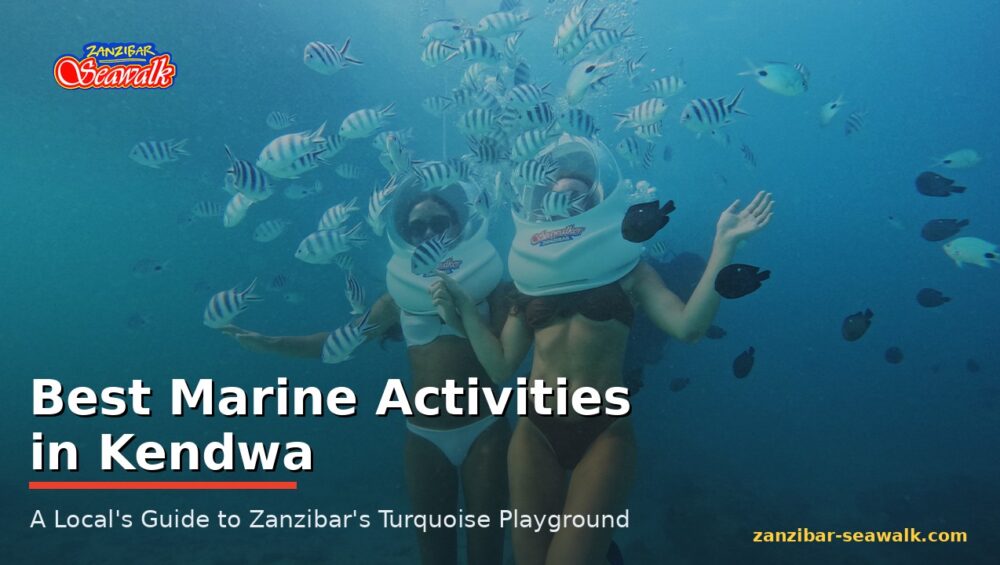
If there’s one activity that sets Kendwa apart from anywhere else in Zanzibar, it’s the seawalk. Unlike scuba diving, seawalking requires no certification, no swimming ability, and no prior experience. You wear a specially designed helmet that keeps air continuously supplied while you walk along the sandy seabed, fully upright, breathing normally, at a depth of around 4–6 meters.
What makes it remarkable is how ordinary it feels once you’re down there. You’re not holding your breath, you’re not fighting buoyancy, and your hair doesn’t even get wet. You simply walk — past coral formations, schools of parrotfish, sea cucumbers, and the occasional curious octopus — the same way you’d walk through a garden.
From experience guiding first-timers through this, the most common reaction on surfacing is genuine surprise at how accessible it was. Families with kids as young as eight, grandparents in their seventies, and complete non-swimmers have all done it successfully. If you want the full breakdown of how the experience works from start to finish, our seawalk experience page walks through the entire process, including safety protocols and what to expect on your first descent.
Good for: Non-swimmers, families, anyone nervous about diving but curious about the underwater world.
2. Snorkeling Kendwa’s Fringing Reef
Just offshore, Kendwa’s fringing reef offers snorkeling that rivals spots requiring a much longer boat ride elsewhere in the Zanzibar archipelago. Visibility regularly exceeds 15–20 meters on calm days, and the shallow reef top means you don’t need to be a strong swimmer to see plate coral, moray eels, lionfish, and dense clouds of reef fish.
Most snorkeling trips from Kendwa run as half-day boat excursions, often combined with a stop at a sandbank or a second reef site further out. If you’re already planning a seawalk, pairing it with a snorkeling trip on the same or following day gives you both the “walking among the reef” perspective and the “swimming above it” view — two very different ways of experiencing the same underwater environment.
3. Scuba Diving for Certified and First-Time Divers
Kendwa’s dive sites benefit from the same calm-water advantage that makes seawalking possible here. Sites like Mnemba Atoll — a short boat ride from Kendwa — are consistently rated among the best diving locations in East Africa, known for spotting green turtles, eagle rays, and, seasonally, dolphins.
For those without a certification, most dive centers along Kendwa run Discover Scuba Diving sessions — a supervised, shallow introduction to diving that doesn’t require a full course. It’s worth noting the distinction between this and seawalking: diving requires managing your own buoyancy and breathing through a regulator, which some first-timers find takes a few minutes to get comfortable with. Seawalking skips that learning curve entirely, which is why many travelers choose to try the seawalk first and use it as a confidence-builder before booking a dive.
4. Dolphin Watching Excursions
While Kendwa itself isn’t the primary dolphin-watching departure point on the island (that title generally goes to Kizimkazi in the south), several operators run early-morning boat trips from the Nungwi–Kendwa area to spot pods of bottlenose and spinner dolphins in the open water. Trips typically depart before sunrise, when the water is calmest and dolphin activity is highest.
A quick note from experience: ethical operators keep a respectful distance and limit swim time near pods to avoid stressing the animals. If dolphin watching is on your list, it’s worth asking any operator directly about their approach before booking — the difference between a respectful encounter and an intrusive one comes down entirely to how the boat and guides behave in the water.
5. Sunset Dhow Cruises
Not every marine activity in Kendwa needs to involve getting wet. A traditional wooden dhow — the same style of sailing vessel used by East African fishermen for centuries — makes for one of the most relaxed ways to experience the coastline. Evening cruises typically combine a slow sail along the coast with fishing demonstrations, and end with sundowners on deck as the sky turns orange over the Indian Ocean.
It’s a genuinely local experience, often crewed by fishermen from Kendwa village itself, and a good option for travelers looking to slow down after a more active day of snorkeling or seawalking.
6. Sandbank and Small Island Boat Trips
Depending on the tide and season, boat trips from Kendwa can include stops at sandbanks that emerge and disappear with the tide, as well as trips further afield to Mnemba Island. These trips are usually built around a mix of snorkeling, swimming, and simply standing on a strip of sand in the middle of open ocean — a genuinely striking experience and a favorite for photography.
7. Kitesurfing and Windsurfing
Kendwa’s consistent trade winds (strongest from December to February and June to September) have made it a growing spot for kitesurfing, with several schools offering lessons for beginners in the shallow lagoon before progressing to open water. It’s a more physically demanding activity than the others on this list, but for travelers wanting an adrenaline-focused marine activity, it’s one of the better options on this coast.
Planning Your Kendwa Marine Activities: A Few Practical Notes
Best time of year: June to October and December to February offer the calmest seas and best visibility for snorkeling, diving, and seawalking. March to May is Zanzibar’s rainy season, and while activities still run, sea conditions can be less predictable.
What to book in advance: Seawalking and diving trips have limited daily capacity due to equipment and safety-staffing requirements, so booking a day or two ahead is worth it, especially in peak season (July–August, December–January).
Combining activities: A common and efficient itinerary is seawalk on day one, snorkeling or diving on day two, and a sunset dhow cruise to close things out — giving you three genuinely different perspectives on the same reef ecosystem.
Sun protection: Reef-safe sunscreen is worth packing specifically, both to protect your skin during long boat days and to protect the coral reef itself.
Final Thoughts
Kendwa earns its reputation not because it has the single “best” activity on the island, but because of the range and quality of what’s accessible from one short stretch of beach. Few places let you walk on the seabed in the morning, snorkel a reef in the afternoon, and sail into a sunset by evening — all without leaving the same few kilometers of coastline.