It’s one of the first things people ask before booking a trip, usually while staring at a flight confirmation: what language do they speak in Zanzibar, and will I actually be able to talk to anyone?
Short answer: Swahili is the main language, English works almost everywhere tourists go, and you’ll be fine. The longer answer is more interesting, and a few words of Swahili will change how people respond to you.
So, what language do they speak in Zanzibar?
Most people on the island speak Swahili, or Kiswahili, as locals call it. It’s the language of home, the market, the mosque courtyard, and the football pitch. It’s also an official language of Tanzania, alongside English.
Zanzibar has its own special place in the story of the language. The local dialect is called Kiunguja, named after Unguja, the island’s proper name, and standard Swahili as it’s taught across Tanzania and East Africa is built on it. In other words, you’re visiting the birthplace of the version of Swahili most people learn.
Swahili is a Bantu language at its core, but centuries of trade across the Indian Ocean left their mark. You’ll hear plenty of words borrowed from Arabic, and a few from Portuguese, Hindi, and English. That mix makes sense once you’ve walked through Stone Town and seen how many cultures have passed through.
Is English widely spoken?
In tourist areas, yes. Hotels, restaurants, dive centers, and tour operators almost always have staff who speak good English, and many guides speak a bit of Italian, French, or German too. You can book a room, order dinner, and join a tour without knowing a single Swahili word.
It gets a little different once you leave the beach strip. In villages, local markets, and on dala-dala minibuses, English becomes patchier. People are patient and friendly about it, but a few basic phrases will make life easier, and a lot more fun.
What about Arabic?
You’ll notice Arabic more in certain places than others. It’s used in religious settings, in some families with Omani Arab roots, and you’ll see it in old Stone Town doorways and signage. It isn’t the language of everyday conversation between most people, though. Swahili is what connects everyone on the island.
Swahili phrases worth learning
You don’t need to be fluent. Even a clumsy attempt gets a smile. These are the ones I’d actually use:
- Jambo or Habari: hello (habari means “news?”)
- Nzuri or Salama: fine, good (the usual reply to habari)
- Karibu: welcome (you’ll hear this constantly)
- Asante / Asante sana: thank you / thank you very much
- Tafadhali: please
- Pole pole: slowly, slowly (the unofficial island motto)
- Hakuna matata: no worries (yes, it’s real, and yes, people really say it)
- Maji: water
- Samaki: fish
- Kwaheri: goodbye
One small bit of etiquette: if you’re greeting an older person, the respectful greeting is Shikamoo, and they’ll usually answer Marahaba. Using it correctly goes down very well.
Language and the water
Here’s something that surprised me. A lot of marine life in Zanzibar has a Swahili name that sounds nothing like the English one, and the guides love teaching them. Ask what kobe is while you’re out on the water (it’s a turtle) and you’ll usually get a story with the answer.
That’s part of why joining local, guided activities beats going it alone. If you’re planning a few days of Zanzibar water activities, you’ll spend a lot of time with local guides who know the reef, the tides, and the best spots, and you pick up the language without trying.
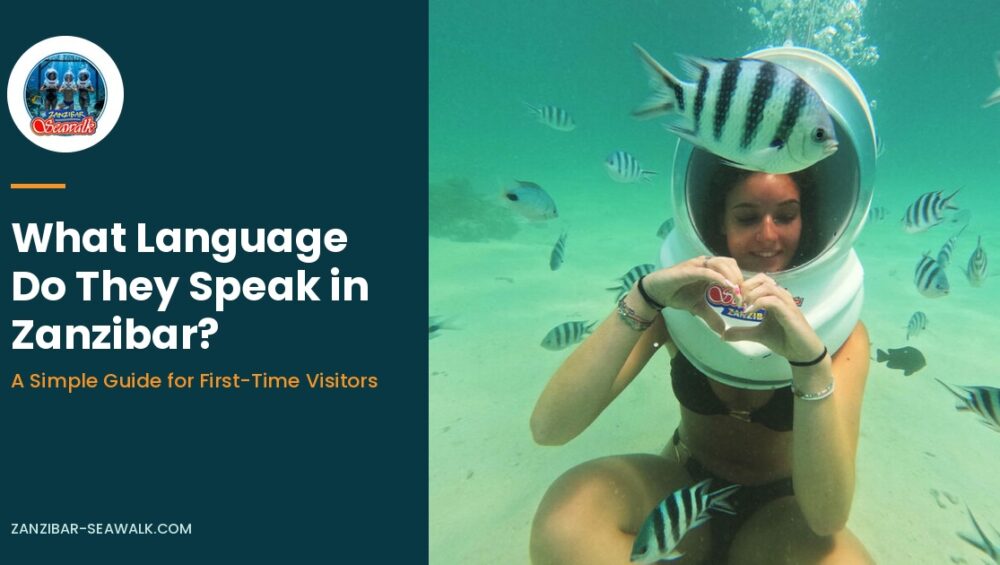
If you like the idea of being in the water without a mask and tank, our SeaWalk takes place at Nungwi Beach and doesn’t need any swimming or diving skills. You walk along the sea floor with a guide beside you, and you can even wear your glasses. Our guides speak English, and you’ll learn a few fish names in Swahili along the way.
If you’d rather swim and float on the surface, there are plenty of Zanzibar snorkeling tours around the island, and it’s worth choosing one that cares for the reef. Eco snorkeling keeps group sizes sensible, avoids touching the coral, and leaves the reef in better shape for the next visitor.
A few quick tips before you go
- Download Swahili offline. Phone signal can be unreliable, so a translation app that works offline is handy.
- Greet first. In Zanzibar, you say hello before you ask anything. Skipping the greeting feels abrupt.
- Don’t worry about pronunciation. Swahili is spelled the way it sounds, and nobody will mind if you get it wrong.
- Learn “pole pole.” It will help you more than any other phrase, and not only with the language.
Final thoughts
So, what language do they speak in Zanzibar? Swahili, with plenty of English layered on top for visitors, and a little Arabic woven into the island’s history. You won’t struggle to be understood, but the effort you put into a few simple words will be noticed and appreciated.
Ready to get out on the water? Book your SeaWalk at Nungwi, or message us on +255 778 619 627 and we’ll help you plan it.