Zanzibar’s water does something strange to a camera. It’s not just clear — it’s lit from below in a way that makes ordinary phone photos look like something out of a magazine, even if you’ve never picked up an underwater camera in your life. That’s the first thing most people notice once they’re actually in the water off Nungwi. The second thing is that capturing it properly takes a bit more thought than pointing and shooting.
If you’re planning a trip and searching for underwater photography in Zanzibar, you’re probably weighing up a few options: renting gear, bringing your own, or just letting a guide handle it for you during an activity like a SeaWalk. Here’s what actually matters, based on what works (and what doesn’t) in these specific waters.
Why Zanzibar’s Water Is Genuinely Different for Photography
Visibility around Nungwi regularly sits at 15 to 25 metres on a good day, which is rare compared to a lot of popular diving and snorkeling destinations. The sand here is pale and fine, almost white, and it reflects sunlight back up through the water instead of absorbing it. That’s why colours pop the way they do — the reds and oranges on a fish’s scales or a piece of coral don’t get swallowed by depth the way they would in murkier or darker-bottomed water.
The trade-off is that this brightness can trick your camera. Auto white balance often overcorrects and pushes everything blue or green, which is the flat, washed-out look you’ve probably seen in other people’s disappointing underwater shots. Getting around that is less about expensive gear and more about a few adjustments most people never think to make.
Gear: What You Actually Need vs. What Gets Sold to You
You don’t need a full underwater rig to get good shots here. A few realistic options:
GoPro or action camera — This is what most visitors bring, and it’s genuinely enough for Zanzibar’s shallow, bright water. Shoot in a flat colour profile if your camera has one, since it gives you more room to fix colour later without the image falling apart.
Waterproof phone case — Fine for snapshots in the first few metres, but phone sensors struggle once you’re past the immediate surface layer. Fine for memories, not for anything you’d print.
A proper underwater camera or housing — Worth it only if you’re already into photography and plan to shoot more than once on the trip. For a single activity like a SeaWalk, it’s overkill.
One thing people forget: a red filter matters more than almost anything else you can buy for shallow tropical water. It counteracts the way water absorbs red light first, and even a cheap clip-on filter makes a visible difference in your shots.
The SeaWalk Advantage for Photography
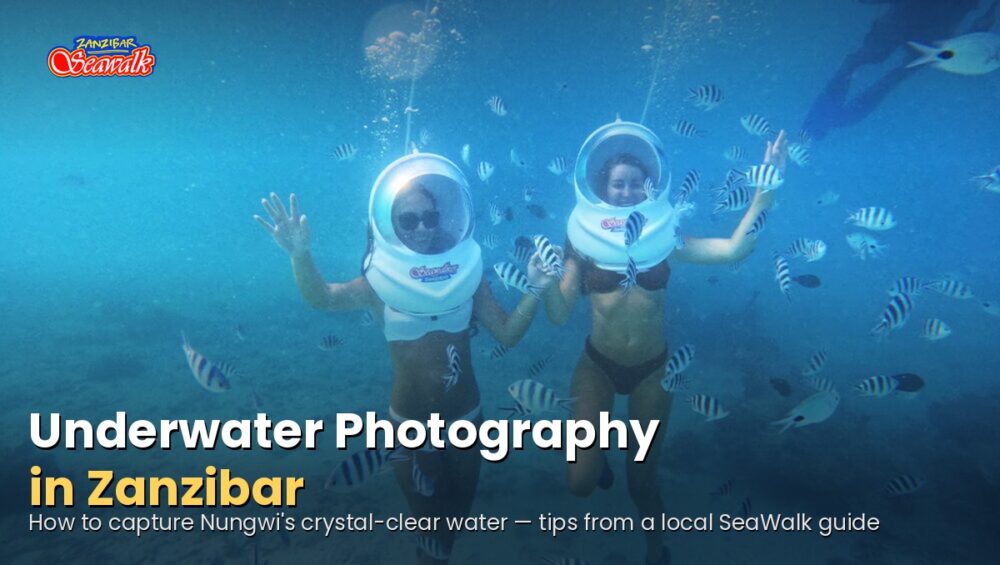
Here’s something worth knowing if you’re weighing SeaWalk against snorkeling or diving purely for the photos: you’re stationary, upright, and walking slowly along the sea floor rather than swimming and adjusting buoyancy. That stillness matters more than people expect. Most underwater photos come out blurry or awkwardly framed simply because the photographer is also trying to stay afloat, equalize, or avoid drifting into coral.
With a guided SeaWalk, our team also brings food that draws fish in close, which means you get shots of marine life actually approaching the camera rather than fleeing it — something that’s genuinely hard to replicate snorkeling on your own. Professional underwater photos are included as part of the experience, taken by guides who know exactly where the light falls best that day and which angles work with the sand and reef formations near Nungwi.
What You’ll Actually See to Photograph
Don’t expect a coral wall like you might picture from the Red Sea or Great Barrier Reef — Nungwi’s underwater landscape is calmer and more open, closer to a sandy garden scattered with coral formations than a dense reef wall. That’s actually a gift for photography, because subjects stand out against the pale sand instead of blending into a busy background.
Expect to see parrotfish, angelfish, butterflyfish, and if you’re lucky, the occasional ray gliding along the bottom. Sea urchins and starfish are common enough that guides will usually point a few out deliberately for photos. None of it requires a macro lens — most of what makes a good shot here is simply subject against clean sand, well lit, close to the surface.
Practical Tips That Actually Make a Difference
Shoot toward the light, not away from it. Late morning to early afternoon gives the most even light through the water column. Shooting with the sun behind you (relative to your subject) avoids the silhouette effect that ruins a lot of first-time underwater shots.
Get close. Water reduces contrast and sharpness the further away your subject is, even in clear conditions like Nungwi’s. If something’s five metres away, it’ll look hazy no matter how good your camera is. Two metres is a better rule of thumb.
Don’t fight the current for a shot. If you’re being guided and see something you want to photograph, say so — the guides know how to position the group so everyone gets a clean angle without kicking up sand, which ruins visibility for the rest of the group fast.
Ask for both the wide shots and the close ones. If you’re relying on the included professional photography, mention early on whether you want scenic, whole-group shots or closer individual portraits underwater. Guides can prioritize differently depending on what you’re after.
Editing Without Overdoing It
If you’re working with your own footage afterward, resist the urge to crank saturation to compensate for flat-looking shots. Usually the fix is warming the white balance slightly and lifting shadows rather than pushing colour. Zanzibar’s water does most of the visual work for you already — the goal in editing is just getting back what your camera lost, not adding something that wasn’t there.
The Simplest Option
If photography matters to your trip but you don’t want to manage gear, settings, or editing on holiday, a guided SeaWalk solves most of the problem for you. You get the stillness that makes for sharp shots, guides who know the water and the light, and professional photos handed to you afterward rather than sorted through hundreds of blurry ones yourself.
Either way — whether you bring your own camera or let a guide handle it — Nungwi’s water gives you more to work with than most places will. It’s just a matter of not fighting the conditions and letting the visibility do what it does best.