
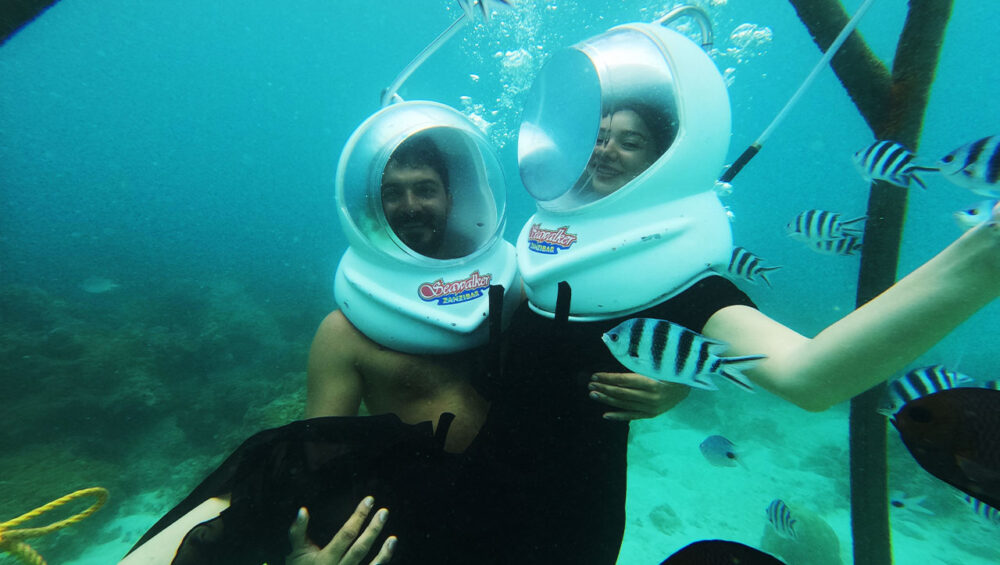
There’s a moment on every Zanzibar holiday when you stop mid-step, look around, and realise you had no idea a place like this could actually exist. The Indian Ocean is so blue it looks rendered. The sand so white it hurts to look at on a cloudless afternoon. And yet — for most visitors in 2026 — the most extraordinary moment of their entire trip happens not on the beach, but six metres below it.
This guide pulls together everything you need to know before you book your flights. Whether this is your first Zanzibar holiday or your third, read on to find out why 2026 is a genuinely strong year to visit.
Why Zanzibar in 2026?
Tourism infrastructure along the northern coast has matured considerably without losing the relaxed, unhurried character that draws people here in the first place. Flights from Europe, the Middle East, and South Asia are more connected through Abeid Amani Karume International Airport (ZNZ) than ever before.
The coral reefs off Nungwi are recovering well from previous bleaching events, water visibility during the dry season is exceptional, and marine life is more accessible than ever — partly thanks to the SeaWalk helmet-diving experience at Nungwi.
When to Go: Seasons Honestly Explained
Zanzibar has two rainy seasons and two dry seasons. The difference matters enormously when planning a beach trip.
Period | Conditions | For Your Trip |
June – October | Dry, warm, excellent visibility | Best overall — book early |
December – February | Dry, hot, calm trade winds | Excellent for beach & water activities |
March – May | Long rains (masika). Heavy downpours | Avoid for beach trips |
November | Short rains (vuli). Unpredictable showers | Manageable; plan for afternoon weather |
For a Zanzibar trip in 2026 focused on water activities, the June through October window is hard to beat. July and August sit at the sweet spot of dry weather, calm seas, and manageable crowds.
NOTE ON WATER ACTIVITIES & WEATHER All water-based activities in Zanzibar — including the SeaWalk — are subject to weather and sea conditions on the day. Reputable operators will reschedule if conditions aren’t safe. Build a day of flexibility into your itinerary if water activities are a priority. |
Getting Around: What Actually Works
Stone Town to Nungwi
The most popular route. A private transfer takes roughly 75–90 minutes. Shared dala-dalas are cheaper but slower. For a packed itinerary, private transfers are worth the cost for at least the airport run and Nungwi day.
Stone Town
Best navigated on foot. The UNESCO-protected old city is a maze of coral-stone alleys, ornate carved doors, and buildings layering Arab, Persian, Indian, and Portuguese influences. Budget at least half a day.
East Coast Beaches
Paje and Jambiani offer kitesurfing and a different pace. If you have more than five nights, it’s worth spending a day or two on the east coast.
The Experience Most Travellers Wish They’d Booked First
We hear it regularly: guests who spent three or four days at the beach before finally doing the SeaWalk on their second-to-last day almost always say the same thing — “Why didn’t I do this on day one?”
The Zanzibar SeaWalk is East Africa’s first underwater walking experience, operating off Nungwi Beach. You put on a weighted helmet — an inverted diving bell — and walk on the ocean floor, 3–4 metres down, among fish and coral. No swimming. No diving experience. No removing your glasses.
“Walking on the seafloor and having fish swim past your face at arm’s length is an experience that photographs genuinely cannot prepare you for.”
How It Works
The helmet (around 30kg) is supported entirely by water once you descend — you feel nothing on your shoulders. Your guide walks with you throughout, pointing out marine life and ensuring you’re comfortable. The session runs 20–30 minutes underwater, with professional guides at all times.
Who It’s Suitable For
- Non-swimmers — no swimming required at any point
- Glasses and contact lens wearers — vision is completely unaffected
- First-time ocean visitors — guides handle everything
- Families — children above minimum age may participate with parental consent
- Anyone curious about reef life without a full diving course
ZANZIBAR SEAWALK · NUNGWI BEACH Walk on the Ocean Floor — No Experience Needed East Africa’s first helmet-diving experience. Safe, fully guided, and open to anyone. Regular sessions from $70 · Private groups up to 5 from $315. Book online: zanzibar-seawalk.com | +255 778 619 627 |
I was genuinely nervous about the helmet — I’m not a strong swimmer and the idea of being underwater at all felt daunting. But the guides were patient, and once I was down there? I forgot I was nervous. I just watched the fish. It was one of the best thirty minutes of my entire trip.
— Priya S., first-time Zanzibar visitor, 2026
Beyond the Beach: What to Include in Your Itinerary
Stone Town
Half a day minimum. The House of Wonders, Old Fort, and Anglican Cathedral built on the site of the former slave market layer history in the most tangible way. Forodhani Gardens at sunset, with its outdoor food stalls, is one of East Africa’s most atmospheric street-food experiences.
Spice Tour
Zanzibar’s colonial-era nickname — the Spice Island — wasn’t an abstraction. Spice farm tours in the interior are a genuine and interesting half-day. You’ll smell and taste vanilla, cardamom, black pepper, and nutmeg at source.
Dolphins at Kizimkazi
Humpback and bottlenose dolphins congregate in the early morning near this southern village. Tours run daily; encounters are with a wild population, not a managed one. Go early, before multiple boats converge on the same pods.
Prison Island (Changuu Island)
A short boat trip from Stone Town leads to a colony of Aldabra giant tortoises — some over 100 years old. The snorkelling off the island’s beach is also excellent.
Mnemba Atoll
For serious snorkellers or certified divers, this protected marine conservation area off the northeast coast is simply among the best reef experiences in the Indian Ocean. Turtles, dolphins, and reef sharks are regularly seen.
Practical Planning: What You Actually Need to Know
Visa and Entry
Most visitors require a Tanzanian visa on arrival or an e-visa arranged in advance. Pre-applying online is recommended to avoid queues. Always verify current requirements directly with official Tanzanian immigration sources before travelling.
Currency and Payments
The Tanzanian shilling (TZS) is the local currency, though US dollars are widely accepted in tourist areas. Major operators take cards, but USD cash is strongly advised for smaller purchases and tips. ATMs in Stone Town are reliable; those in Nungwi are fewer.
Health
Zanzibar is a malaria zone — antimalarial precautions are advised. Consult a travel health clinic at least six weeks before departure. Yellow fever vaccination is required if travelling from a country with yellow fever risk. Drink bottled or purified water.
What to Pack
- Light, breathable clothing — cotton works better than synthetics in the heat
- Reef-safe mineral sunscreen (zinc oxide or titanium dioxide) — chemical filters damage coral
- Rashguard or swim shirt for extended time in the water
- Modest clothing for Stone Town and mosque visits
- Flip-flops for the beach; closed shoes for Stone Town’s stone streets
- Insect repellent for evenings
- Type G power adapter (same as UK)
REEF-SAFE SUNSCREEN — A GENUINE REQUEST Chemicals in conventional sunscreens — particularly oxybenzone and octinoxate — contribute measurably to coral bleaching. Mineral-based reef-safe sunscreens are now widely available. For any water activity near a reef including the SeaWalk, please use one. It’s a small decision with a real impact. |
Final Thoughts
Zanzibar rewards a certain pace. The travellers who have the best holidays are the ones who build in enough time to actually be somewhere. Five nights minimum; seven is better. Stay in Nungwi for at least two nights to catch the SeaWalk, the beach, and the sunset.
And do the SeaWalk. It will be the photograph you show people when you get home, and the memory that stays sharpest once the tan fades.
About the Author Written by the Zanzibar SeaWalk team, based year-round at Nungwi Beach. Questions? Reach us at info@zanzibar-seawalk.com or +255 778 619 627. |